AN INDEPENDENT VIEW OF WORLD EVENTS EDITORIAL DESK | ENRU 
GEOPOLITICS · 08/11/2026
Iran Warns Over US Bases in Europe: What Is Verified | BULAVA
Iran warned about US bases in Europe if used to attack it. What was actually said, why a Ukraine missile map is disputed, and Erich Vad's risk analysis.
 In early November 2026, an old question about European security acquired a sharp new edge: can a military base belonging to one country make the territory of another a potential target for retaliation? A warning from Tehran pushed that issue into public debate. The story involves American military facilities in Europe, Iranian deterrence rhetoric, a contested image circulating online and a German former general’s argument about the uneven geography of risk. It is not evidence that a new European war is inevitable. It is, however, a reminder that military alliances create both protections and responsibilities for the countries that host foreign forces.
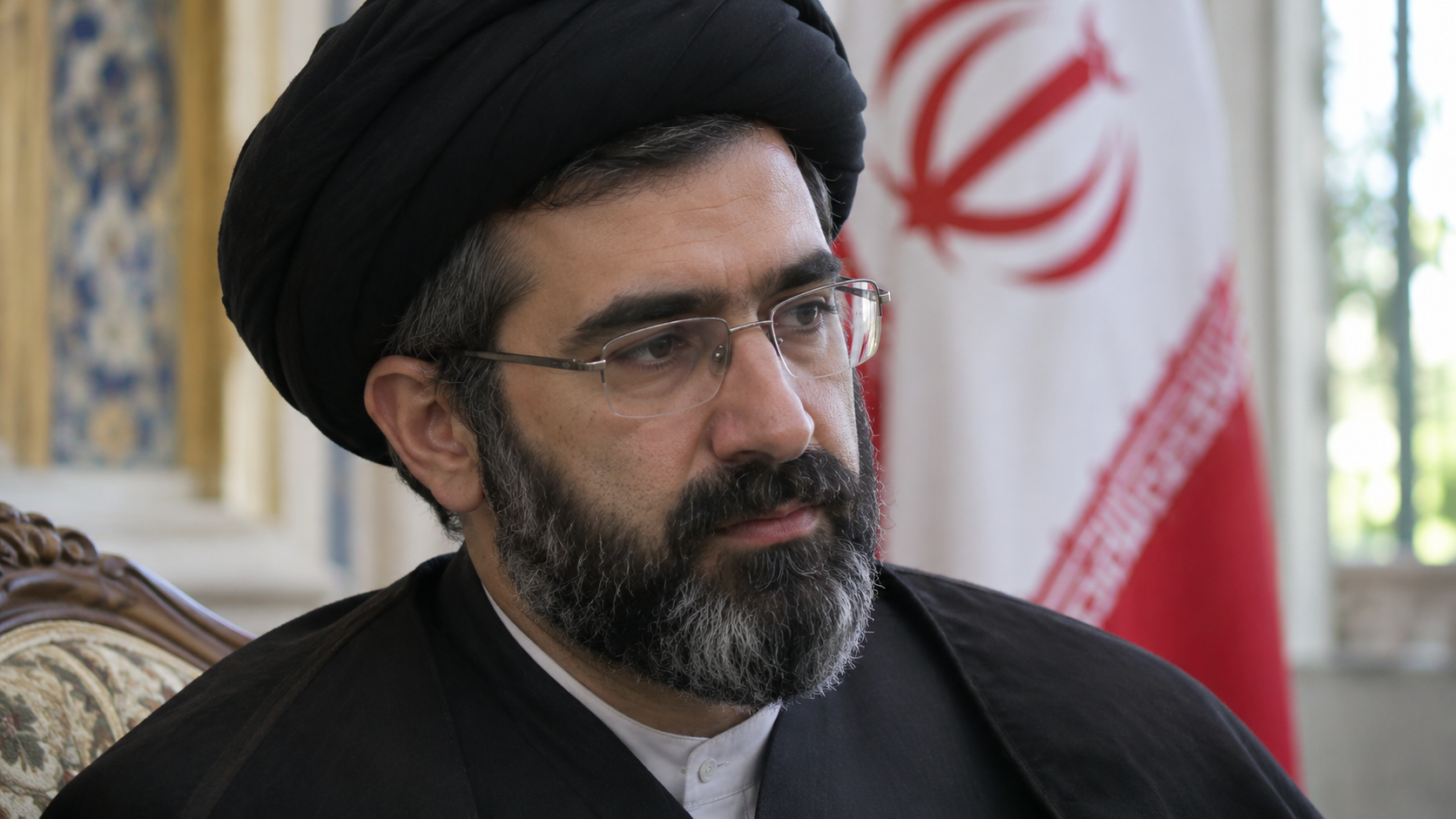
On 4 November, Iranian lawmaker Ahmad Bakhshayesh Ardestani told Euronews that Tehran could strike American bases in European countries if Washington used those facilities in a new attack on Iran. He specifically mentioned Italy and Germany. The condition matters. He did not announce that missiles had been launched, nor did he identify every European country as an imminent target. His remarks were a public warning about possible retaliation, designed to influence the decisions of governments considering how their territory and infrastructure might be used during another confrontation. Removing that condition produces a much more dramatic headline, but a considerably less accurate account.
The lawmaker’s comments followed a broader round of Iranian statements about responding to threats without geographical limits. Euronews reported on 1 November that Iran’s supreme leader had called for an immediate, effective response if the country faced another attack. Iranian media subsequently discussed the possibility of adding American support facilities in Europe to potential target lists. These statements describe posture and intentions as communicated by Iranian officials and outlets. They do not independently establish operational capability, the selection of final targets or a decision to launch an attack. The distinction between declared policy and actual military action is essential when public rhetoric is this severe.
For host countries, the issue is deeply uncomfortable. American bases may supply logistics, intelligence, communications, air operations and other capabilities that support collective defence. Supporters view them as evidence of a durable security commitment, and that assessment cannot simply be dismissed. Yet a rival state may see the same base through a completely different lens: a facility that helps an adversary project force. The same concrete runway may appear in one country’s planning documents as a shield and in another’s as a point of vulnerability. Both descriptions reflect competing strategic perspectives rather than a simple contradiction in geography.
Then came a striking digital image. Social media accounts circulated what appeared to be a screenshot from Iranian television showing missiles aimed toward several Ukrainian cities, including Kyiv, Lviv and Odesa. Some accounts presented the image as proof that Iran had threatened Ukraine directly. On 4 and 5 November, Ukraine’s Center for Countering Disinformation challenged that account, stating that the screenshot was fabricated and the original television broadcast contained no such threats. Ukrinform and other Ukrainian news outlets reported the center’s finding. The supposed map therefore cannot responsibly be presented as an authenticated Iranian targeting document or a verified television graphic.
The debate also intersects with comments from Erich Vad, a retired German brigadier general and former military adviser to Chancellor Angela Merkel. Vad has argued that Europe needs to think much harder about the danger of escalation involving Russia. In an interview with journalist Flavio von Witzleben, he addressed potential attacks on European defence facilities and the danger of direct confrontation. Russian-language reporting highlighted his suggestion that Moscow might sound out Washington before any hypothetical strike on such targets. This was the general’s scenario, not a confirmed Russian plan and certainly not evidence of American approval.
Vad’s more enduring argument concerns geography. In a separate interview with the German publication der Freitag, he warned that a major war fought in Europe could devastate European territory without necessarily causing direct destruction inside the United States. That observation does not establish that American leaders wish Europe harm. American and European security interests overlap in many significant ways, and Washington also faces economic and political consequences from instability abroad. But their exposure to immediate physical damage is not identical. European leaders must account for that difference rather than relying entirely on the language of common purpose.
This is where debates about strategic autonomy become concrete. Autonomy does not simply mean possessing more weapons or issuing declarations about sovereignty. It means the ability to shape decisions that determine national exposure to risk. Governments hosting allied forces can pursue clarity about mission authorisation, demand credible consultation, strengthen defensive preparedness and maintain diplomatic channels. None of these steps guarantees safety. Together, however, they can reduce the chance that critical decisions are understood only after a crisis has escalated beyond control. The public also deserves an intelligible explanation of how security commitments work in practice.
NATO’s collective defence framework is central to European security, but it should not be portrayed as a mechanical switch that automatically produces the same military response to every incident. Allies must assess circumstances and decide on appropriate measures. Equally, striking territory belonging to an alliance member carries obvious escalation risks. Arguments that military action can be confined neatly to one site on a map underestimate the political consequences of crossing borders. In such a setting, deterrence, communication and crisis management are not signs of weakness. They are ways to keep threats from becoming irreversible actions.
The November developments should therefore be read with precision. An Iranian parliamentarian warned of possible strikes on US bases in Europe under specified conditions. Iranian officials discussed a broader approach to retaliation. A purported television map naming Ukrainian cities was challenged as fabricated by Ukrainian fact-checking authorities. A retired German general described scenarios and risks that should be understood as his analysis, not as established intentions of governments. Keeping these strands separate is the difference between informing the public and merely amplifying anxiety.
Beneath the headlines lies a question no European government can easily escape: who ultimately controls the decisions that could turn its territory into a battlefield? Allies need one another, and international security often requires shared infrastructure. Yet shared infrastructure also makes consultation, accountability and restraint indispensable. A serious security policy cannot promise that geography will protect everyone equally. It can, at minimum, insist that those who may bear the consequences have a meaningful voice before a crisis passes the point where their choices still matter.
Sources: https://www.euronews.com/2026/11/04/iranian-mp-tells-euronews-tehrans-missiles-will-strike-europe-if-us-uses-its-bases-there; https://www.ukrinform.ua/rubric-society/4181567-pogrozi-iranu-zavdati-raketnih-udariv-po-ukraini-ce-fejk-spramovanij-na-posirenna-panicnih-nastroiv-cpd.html; https://www.freitag.de/autoren/simon-zeise/erich-vad-ueber-us-tomahawks-friedrich-merz-muss-jetzt-mit-russland-verhandeln