AN INDEPENDENT VIEW OF WORLD EVENTS EDITORIAL DESK | ENRU 
GEOPOLITICS · 08/11/2026
Kremlin Talks About Ending the Ukraine War: Putin Meets Witkoff as Zelenskyy Signals a Possible Ceasefire
After Putin met with US envoy Steve Witkoff, Kremlin aide Yuri Ushakov discussed diplomatic momentum. What is known about Ukraine ceasefire proposals and future talks?
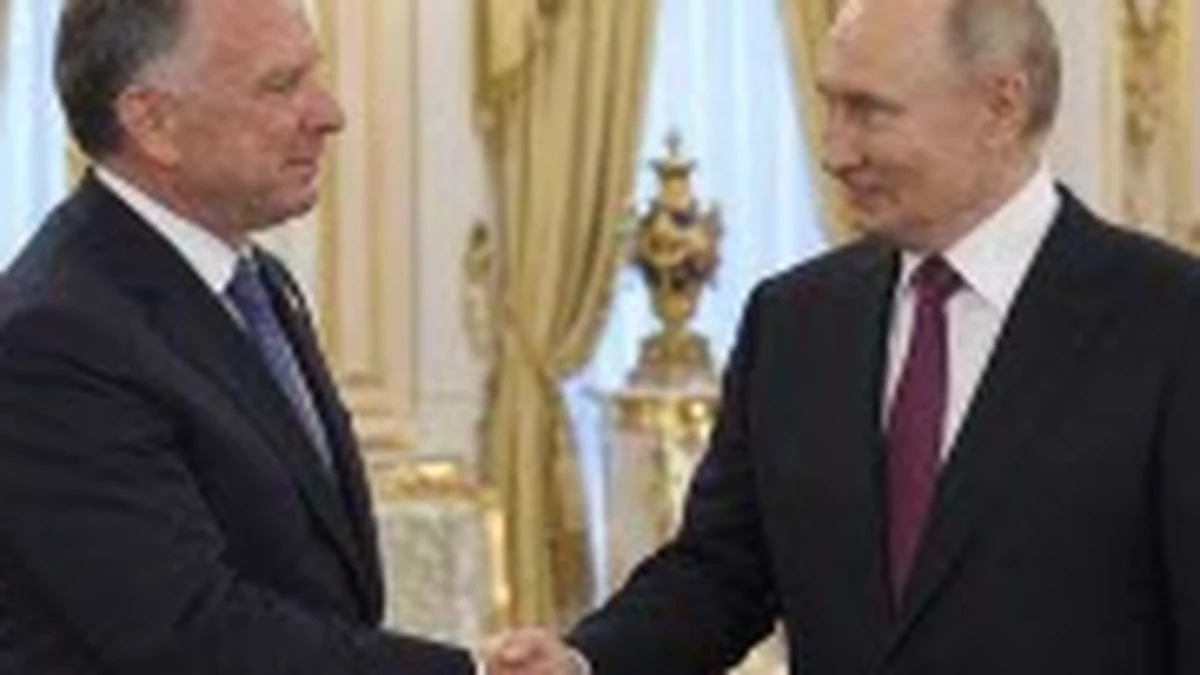 A remarkable change in diplomatic language emerged on October 21, 2026, following a meeting between Russian President Vladimir Putin and US special envoy Steve Witkoff.
Kremlin foreign policy aide Yuri Ushakov suggested that efforts to resolve the conflict in Ukraine were moving toward a conclusion.
The statement immediately attracted international attention.
For years, peace negotiations have produced countless declarations, diplomatic visits and competing proposals. This time, however, several developments occurred almost simultaneously.
Russia expressed readiness to resume trilateral discussions with the United States and Ukraine. President Volodymyr Zelenskyy indicated that freezing the current front lines could provide a realistic basis for ending hostilities. Meanwhile, Moscow acknowledged changes in the European approach to negotiations.
The central question is whether these developments represent meaningful diplomatic progress or merely another change in political rhetoric.
Putin and Witkoff Meet in St. Petersburg
The meeting took place at the Konstantinovsky Palace near St. Petersburg and lasted approximately three hours.
Witkoff arrived following consultations in Oslo, where American representatives had discussed possible approaches to resolving the conflict with Ukrainian and European officials.
His visit effectively connected two important diplomatic conversations within twenty-four hours.
Russian officials, including Yuri Ushakov and Kirill Dmitriev, participated in the St. Petersburg discussions.
According to reports, the American delegation presented documents and ideas related to a potential settlement.
The negotiations also touched on possible economic cooperation between Russia and the United States.
Nevertheless, the conflict in Ukraine remained a central issue.
The format of the meeting demonstrated that direct communication between Moscow and Washington continues to play an important role in diplomatic efforts.
Why Ushakov's Statement Matters
Following the meeting, Ushakov spoke to Russian journalist Pavel Zarubin about prospects for ending the conflict.
He indicated that developments were moving toward a settlement, although he could not specify how close the parties were to achieving one.
This distinction matters.
The Kremlin did not announce a peace agreement or a confirmed date for ending hostilities.
Instead, the statement offered a cautiously positive assessment of the diplomatic process.
For international observers, the significance lies in the broader context.
The Russian government is discussing renewed negotiations and potential security arrangements after the conflict.
Such language reflects attention to the political framework that would follow a cessation of fighting.
However, agreement on principles remains different from agreement on implementation.
Abu Dhabi Emerges as a Possible Negotiation Venue
Russia, the United States and Ukraine may hold another round of trilateral negotiations in November.
Ushakov identified Abu Dhabi as the anticipated location, with discussions potentially taking place around the middle of the month.
The proposed meetings would be conducted at the expert level.
Earlier rounds of US-mediated talks had taken place in Abu Dhabi and Geneva, making the Emirati capital an established diplomatic venue.
The next discussions are expected to focus on a future security framework for both Russia and Ukraine.
This represents one of the most complicated aspects of any settlement.
A ceasefire could stop active fighting, but lasting stability would require clear obligations, monitoring arrangements and agreement on how violations would be addressed.
Those details are often considerably harder to negotiate than a public declaration of peace.
Europe May Be Changing Its Approach
Another important part of Ushakov's remarks concerned European representatives.
According to the Kremlin aide, American negotiators observed new elements in European positions during the Oslo consultations.
Moscow did not consider those changes sufficient to satisfy its requirements.
Nevertheless, Ushakov suggested that European officials were beginning to approach the crisis more seriously.
That assessment was striking because European governments have spent years combining sanctions, political statements and support for Ukraine with calls for a sustainable settlement.
Russian officials have frequently criticized European proposals as unrealistic.
The latest remarks suggest that Moscow sees at least some movement in the negotiating positions.
Whether such movement can produce a compromise remains uncertain.
Diplomacy, after all, does not award prizes for the number of meetings held. Its value becomes evident when competing proposals can be translated into workable agreements.
Zelenskyy Discusses Freezing the Front Lines
On October 21, Zelenskyy appeared on Fox News and discussed a possible ceasefire.
During the interview, host Brian Kilmeade asked whether he would accept a peace deal that froze the conflict along its current lines while Ukraine retained control of 75 percent or more of its territory.
Zelenskyy answered affirmatively.
He described freezing the present situation as a potentially realistic way of ending the fighting.
The Ukrainian president also emphasized the importance of security guarantees from the United States and European partners.
His comments quickly became a major international headline.
However, his position should not be confused with legally recognizing territorial changes.
Accepting a ceasefire along existing military positions is not the same as agreeing to permanently surrender sovereignty over territory.
That distinction will be crucial in any future negotiations.
The Territory Question Remains Unresolved
Territory remains one of the most difficult issues facing negotiators.
A proposal to stop fighting along the current front line raises several different questions.
Who controls particular areas during a ceasefire?
What happens to international legal claims?
How would civilian movement and humanitarian access be managed?
And what mechanisms could prevent hostilities from restarting?
Ukraine maintains its internationally recognized territorial claims, while Russia continues to advance its own territorial and security demands.
A temporary military arrangement would not automatically resolve these competing positions.
This is why the discussion about a ceasefire cannot be separated from the broader debate over lasting security.
Without credible guarantees and clear enforcement arrangements, even a successful pause in fighting could remain fragile.
Trump's Diplomatic Role
President Donald Trump's administration continues to pursue direct contacts with Moscow and Kyiv.
Witkoff has become a central figure in that process.
His journey from Oslo to St. Petersburg illustrates Washington's attempt to communicate proposals between the parties.
The United States also faces questions about its potential role in any post-conflict security architecture.
For Ukraine, American participation could be essential to making guarantees credible.
For Russia, the scope and structure of those guarantees would be equally important.
These positions create difficult negotiations over responsibilities, military arrangements and long-term political commitments.
The challenge is not simply persuading leaders to meet.
It is developing a framework that each side considers sufficiently secure to implement.
Three Possible Outcomes in November
The first scenario involves significant progress.
Negotiators could agree on broad principles governing a ceasefire and future security arrangements, creating a foundation for further decisions.
The second scenario is partial progress.
Some disagreements might narrow while territorial questions and security guarantees remain unresolved.
In that case, another round of discussions would probably follow.
The third scenario involves renewed diplomatic deadlock.
The parties might find that their proposed conditions remain incompatible, preventing meaningful movement toward an agreement.
Each scenario is plausible because the public statements so far provide limited detail about the actual proposals.
Much will depend on whether political flexibility can be translated into specific obligations.
Is a Peace Agreement Getting Closer?
The developments of October 21 are noteworthy because several diplomatic signals appeared together.
Putin met with the US envoy.
Ushakov discussed movement toward a conclusion.
Zelenskyy publicly accepted the possibility of freezing the current front lines.
And Moscow acknowledged a somewhat more serious European approach.
None of these events guarantees an agreement.
Together, however, they indicate that discussions about a possible settlement are continuing at a significant level.
The next major test could come in November, when the proposed trilateral talks may return to Abu Dhabi.
The outcome will depend less on the optimism of public statements than on the substance of the proposals.
For now, one question remains: Will the next diplomatic meeting bring the parties closer to peace, or will it simply produce another agreement to continue negotiating?
Sources: Reuters (21 Oct 2026) — https://www.investing.com/news/world-news/putin-hosts-trump-envoy-for-new-ukraine-peace-talks-frees-us-citizen-held-in-russia-4962103 ; Associated Press — https://apnews.com/article/3f00c0c6fd10bab948c2c3f8502e0a91 ; Fox News (21 Oct 2026) — https://www.foxnews.com/world/ukraines-zelenskyy-open-freezing-front-lines-ceasefire-russia.amp .
Photograph supplied by the editorial team; original image has limited resolution.