AN INDEPENDENT VIEW OF WORLD EVENTS EDITORIAL DESK | ENRU 
GEOPOLITICS · 05/11/2026
G20 Family Photo Cancelled Over Lavrov: Why a Missing Picture Became the Story in Atlanta
G20 foreign ministers in Atlanta cancelled their traditional group photo after objections to posing with Sergey Lavrov. Here is what happened and what Marco Rubio said about his brief conversation with Lavrov.
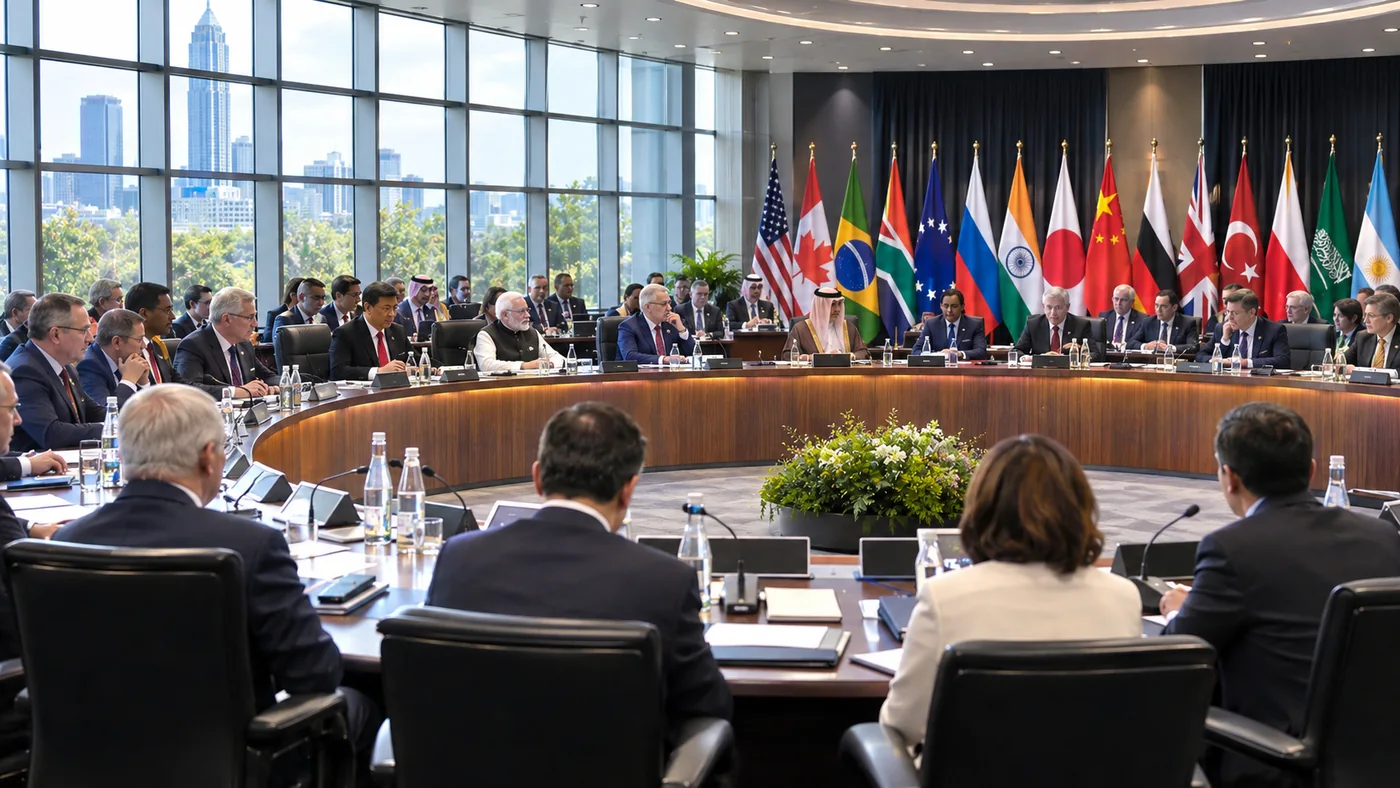 A diplomatic photograph typically lasts only a few seconds. Foreign ministers arrange themselves in rows, cameras flash, and the resulting image becomes a visual record of international cooperation. At the G20 foreign ministers' gathering in Atlanta on October 30–31, 2026, even this modest ceremony proved politically difficult. The traditional group photo was cancelled after several European and other Western delegations objected to being photographed alongside Russian Foreign Minister Sergey Lavrov.
The episode was more than a dispute over a picture, yet less than the collapse of a summit. The delegates continued meeting, Russia remained represented, and US Secretary of State Marco Rubio later had a brief conversation with Lavrov. The contradiction captured an essential feature of contemporary diplomacy: governments can reject the symbolism of friendship while maintaining practical channels of communication.
What happened at the G20 meeting in Atlanta?
The United States hosted the foreign ministers' gathering ahead of the G20 leaders' summit scheduled for December. Rubio's agenda included economic security, global supply chains, energy, trade and international crises. Yet before the substantive discussions began, a familiar ceremonial item became a problem. Reports indicated that a group of delegations would not appear in a collective photograph if Lavrov were included.
Reuters reported on October 30 that around one-third of the participants, including representatives of Australia and Canada, had expressed opposition, according to a Western diplomat. An American official said the State Department had removed the photo from the agenda rather than allow it to become a spectacle distracting from the meeting. Other reporting described consideration of two separate photographs, one including Lavrov and one without him. In the end, neither arrangement went ahead.
The distinction matters. The ministers did not cancel the G20 discussions. Lavrov was not expelled from the meeting. The contested element was a ceremonial photograph designed to suggest collective participation. When headlines turn an abandoned photo into an international diplomatic earthquake, that essential context can disappear.
Why did some European ministers refuse the picture?
For several European governments, appearing beside Lavrov in an official image could be interpreted as a sign that relations with Russia had returned to normal. Their objections were tied to the war in Ukraine, the ongoing diplomatic rift and their public support for Kyiv. German Foreign Minister Johann Wadephul argued that a joint family photograph was inappropriate when relations with Moscow remained deeply strained.
Lavrov's reaction: a dispute over photographic diplomacy
The Russian foreign minister responded to the controversy with sarcasm. At a press conference, Lavrov referred to the dispute as a form of "family photo diplomacy," suggesting that his critics were concentrating on how they appeared in pictures rather than the work of international engagement.
From Moscow's perspective, the most useful message was that Russia continued to take part in a major international forum despite sanctions and political opposition. The photo had been cancelled, but the Russian delegation had not disappeared from the room. Lavrov's response turned the absence of a picture into an argument about the limits of symbolic isolation.
That interpretation is not the only possible one. European ministers also achieved their stated immediate objective: no collective photo showing them alongside the Russian foreign minister was published from the planned ceremony. Each side could claim a symbolic result. Describing either position as a decisive diplomatic victory would obscure the smaller, more complicated reality.
A brief conversation with Marco Rubio
The next development attracted even more attention. Lavrov and Rubio spoke during the gathering, including informal contacts reported around a reception at the Georgia Aquarium. Russian Foreign Ministry spokesperson Maria Zakharova shared photographs of the diplomats interacting, and international news organisations subsequently reported the exchange.
On October 31, Rubio clarified that the contact had been brief and should not be described as a formal bilateral meeting. According to his remarks, the conversation included the possibility of future contacts between the two countries' leaders at an Asia-Pacific regional forum. Lavrov also gave his assessment of the exchange and discussed the continuing importance of communication between Moscow and Washington.
The distinction between a conversation and a formal negotiation is critical. A photograph of two senior officials standing together does not establish the existence of a secret agreement, a breakthrough on Ukraine or a change of policy. It establishes that they spoke. In a time of intense geopolitical tension, that fact is significant enough without embellishment.
For the United States, maintaining such channels is consistent with the idea that disagreements do not eliminate the need for dialogue. Rubio defended the importance of speaking with Russia in his subsequent press availability. Diplomatic contact is not identical to political endorsement. Governments frequently negotiate with counterparts whose actions they condemn, particularly when disputes concern security, war, energy or the risk of escalation.
What the United States was trying to avoid
The photo dispute created an awkward procedural choice for the hosts. Proceeding with one picture could have triggered a visible walkout. Arranging two separate pictures would have made the division explicit and might have looked like an institutional endorsement of rival groups. Cancelling the photograph offered a way to remove the immediate flashpoint while preserving the formal programme.
Rubio's opening remarks focused on interconnected economic and geopolitical threats. Energy availability, food security, trade routes and the resilience of global supply chains affect many countries at once. The G20 exists because such problems cannot always be solved through isolated national decisions. That practical dependence can persist even when the participants publicly disagree on fundamental political questions.
The competing messages behind one cancelled image
The episode involved at least three approaches to diplomatic messaging. European governments emphasised the moral and political symbolism of refusing a normal-looking group portrait. Russia highlighted the persistence of its presence in international dialogue. The United States sought to protect the meeting's agenda by taking a disputed ritual off the schedule.
Why the Atlanta episode matters beyond the headlines
The most revealing aspect of the story may be its disproportionate media impact. Ministers gathered to discuss problems affecting billions of people, yet a photograph that was never taken became one of the meeting's defining images. The absence itself became the symbol. The more intensely the participants argued about who could stand next to whom, the more attention the missing picture attracted.
The Atlanta G20 dispute is therefore best read neither as definitive proof of Russia's isolation nor as proof that Western pressure has failed. It is evidence of a deep political divide coexisting with practical engagement. The cameras were switched off for a collective portrait. The hard work of international diplomacy, with all its contradictions, continued without it.
Sources: Reuters (Oct. 30, 2026) — https://www.reuters.com/world/g20-foreign-ministers-skip-photo-op-amid-objections-over-russia-2026-10-30/ ; Associated Press — https://www.ksat.com/gallery/news/2026/10/31/g20-foreign-ministers-to-end-atlanta-meeting-without-consensus-on-key-issues/ ; Euronews — https://www.euronews.com/2026/10/30/eu-diplomats-object-to-g20-photo-with-lavrov-prompting-us-cancellation .
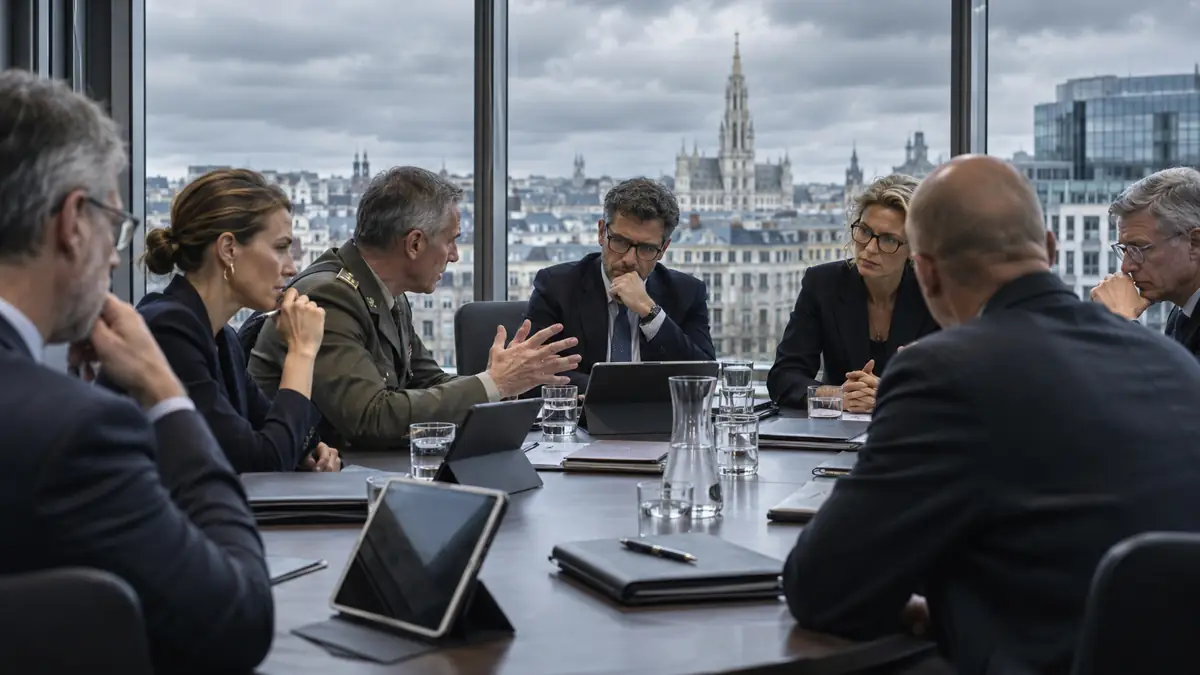
Cover image: editorial illustration, not a documentary photograph of the meeting.