 Belarusian President Alexander Lukashenko said on November 3, 2026, that the war in Ukraine could end within the next few months. The prediction, made during the fourth Minsk International Conference on Eurasian Security, immediately attracted attention because of its unusually short time horizon. Lukashenko pointed to fatigue and depleted resolve as reasons for expecting a turning point.
What Lukashenko Actually Said
Lukashenko described the coming months as a possible period for the war to end and explicitly presented that assessment as his personal opinion. Reports of his remarks highlighted his argument that everyone was exhausted and that resources were running short. In expanded accounts, the Belarusian leader clarified that he was also talking about psychological resources and the capacity to sustain an exhausting confrontation. This distinction matters.
Why the Prediction Matters Now
The war has entered its fifth year, and the consequences extend far beyond the battlefield. Human losses, displacement, physical destruction and the pressure of prolonged insecurity have made the possibility of negotiations an urgent issue for people across the region. Any statement suggesting a near-term settlement will therefore generate intense interest. Yet the significance of a remark does not guarantee its accuracy.
Minsk Offers a Venue
Lukashenko also said Belarus was ready to host negotiations and encouraged the parties to meet directly in Minsk. The invitation fits the country's long-standing ambition to remain relevant to regional security discussions. A venue can help organize meetings and provide logistical support, but it cannot resolve the central disputes on its own.
Why Abu Dhabi Is at the Center of Attention
Reuters reported on November 3 that the Kremlin had confirmed three-way talks involving Russia, Ukraine and the United States in Abu Dhabi on November 10–11, 2026. According to the report, Russian presidential aide Vladimir Medinsky was set to lead Moscow's delegation. American envoy Steve Witkoff had previously said Washington intended to bring the Russian and Ukrainian teams together for talks addressing post-war security and de-escalation.
What Negotiators May Discuss
The stated agenda includes ending the war, security arrangements following any agreement, steps to reduce escalation and humanitarian concerns. Behind each of these headings are complicated questions. Negotiators may need to address sequencing, monitoring, the exchange or release of people held by the parties, civilian protection, infrastructure, safeguards against renewed hostilities and the implementation of future commitments. However, the precise contents of any draft settlement have not been publicly established in the reports examined here.
Washington’s Diplomatic Role
The United States is seeking to facilitate the next round and bring the opposing delegations into a common negotiating format. For Washington, this role has strategic and diplomatic significance, including its ability to help frame potential security guarantees. But mediation does not confer the power to make incompatible demands disappear. Even a major international actor faces limits when the core questions concern the security, political choices and future commitments of other states.
Why Exhaustion Does Not Automatically Produce Peace
War fatigue can increase the incentives to negotiate, but fatigue and agreement are not the same thing. The parties may hold fundamentally different views about acceptable security guarantees, territorial questions, monitoring, enforcement or the order in which commitments should take effect. A proposal that looks balanced to one delegation may appear dangerous or insufficient to another.
The Warning About a Wider War
Lukashenko additionally warned that further escalation could lead to a third world war. The remark was dramatic and reflects how serious he considers the risks. It should nevertheless be described as a warning and a political assessment, not as evidence that global war is inevitable or imminent. The possibility of escalation underscores the value of reliable communication channels and measures that reduce the chance of miscalculation.
Military Tensions Continue Alongside Diplomacy
The contrast between negotiation plans and events on the ground was particularly striking on November 3. Moscow Mayor Sergei Sobyanin said that 493 drones had flown toward the Moscow region between the evening of November 2 and the morning of November 3. He said many were intercepted at greater distances and 187 were neutralized on approaches to Moscow. Interfax and other Russian outlets reported these figures based on the mayor's statement.
What a Meaningful Breakthrough Would Look Like
A major result would involve more than a positive photograph of participants seated around a table. One indication would be specific commitments announced by the parties, supported by a mechanism for monitoring implementation. Another would be practical humanitarian measures with observable outcomes for affected civilians and detainees. A third would be a credible schedule for further meetings, including a process for handling unresolved disagreements.
Three Levels of Certainty
Readers should distinguish between three categories of developments: a prediction, a scheduled negotiation and an agreed settlement. Lukashenko supplied a prediction about the coming months. Reuters reported a defined meeting in Abu Dhabi, and the Kremlin confirmed that meeting. Neither fact is equivalent to a signed peace agreement or an agreed timeline for ending the war. The temptation to collapse these categories is understandable in a fast-moving news cycle, especially when headlines compete for attention.
What to Watch on November 10–11
The next test will be the reported meetings in Abu Dhabi. Key signals include the final composition of the delegations, official descriptions of the agenda, statements made after the talks and any agreement to continue discussions. Concrete measures involving de-escalation or humanitarian access would be particularly meaningful because they can sometimes be assessed in practice.
The Bottom Line
Lukashenko's comments put a short and memorable timeline at the center of the debate, and the Abu Dhabi meetings give observers a specific diplomatic event to follow. Together, they have intensified discussion about whether the war is entering a decisive political phase. But the evidence currently available supports a narrower conclusion: there is a forecast by the Belarusian president and there is a scheduled negotiating round, while the terms of any final agreement remain unknown.
Sources: RBC (November 3, 2026) https://www.rbc.ru/politics/03/11/2026/6ae99c35e2f23c723b0a8c61 ; Reuters (November 3, 2026) https://www.reuters.com/world/europe/kremlin-confirms-trilateral-ukraine-peace-talks-abu-dhabi-next-week-2026-11-03/ ; Interfax (November 3, 2026) https://www.interfax.ru/russia/1126698 .
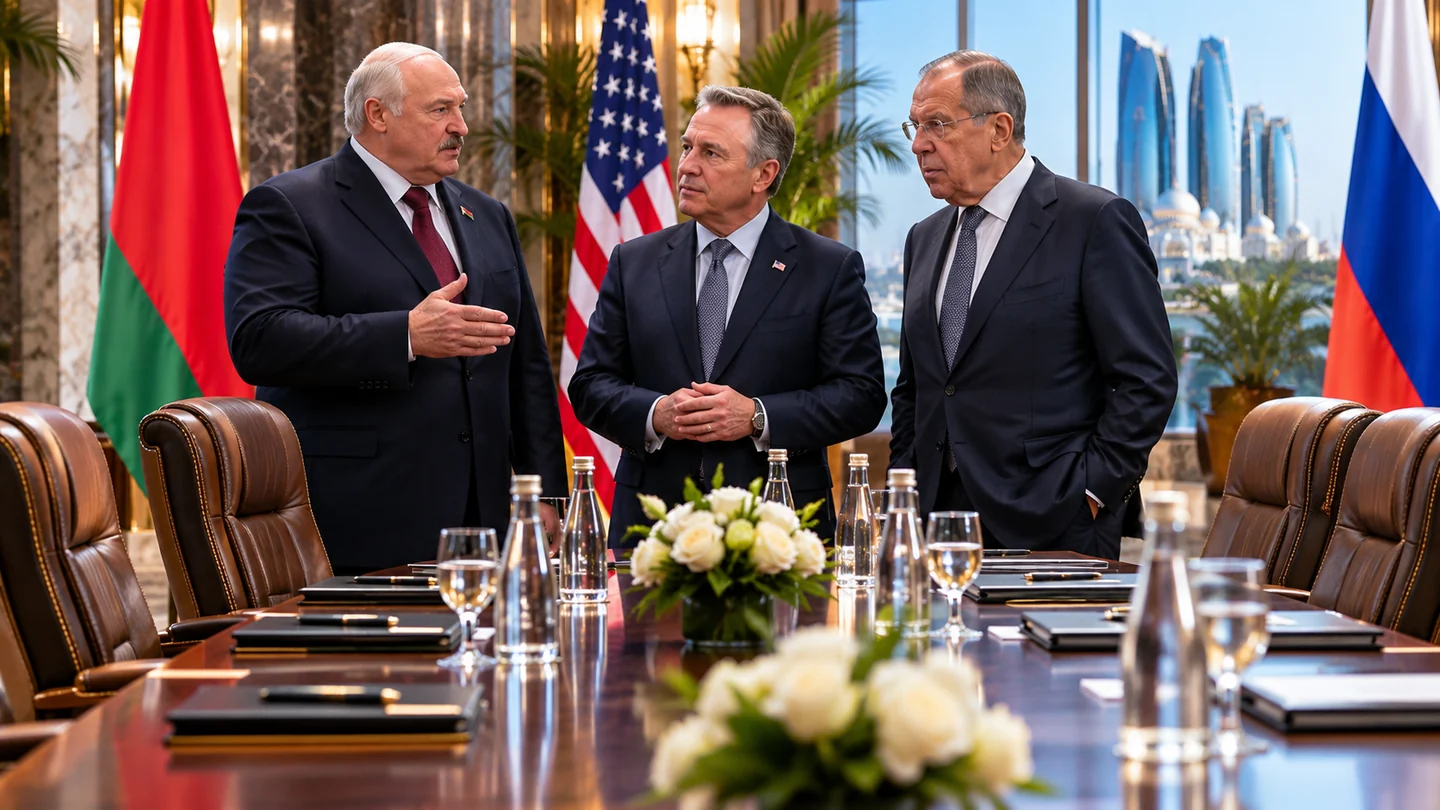
Illustration: AI-generated editorial composite. It is not a documentary photograph of an actual meeting involving the depicted figures.Belarusian President Alexander Lukashenko said on November 3, 2026, that the war in Ukraine could end within the next few months. The prediction, made during the fourth Minsk International Conference on Eurasian Security, immediately attracted attention because of its unusually short time horizon. Lukashenko pointed to fatigue and depleted resolve as reasons for expecting a turning point.
What Lukashenko Actually Said
Lukashenko described the coming months as a possible period for the war to end and explicitly presented that assessment as his personal opinion. Reports of his remarks highlighted his argument that everyone was exhausted and that resources were running short. In expanded accounts, the Belarusian leader clarified that he was also talking about psychological resources and the capacity to sustain an exhausting confrontation. This distinction matters.
Why the Prediction Matters Now
The war has entered its fifth year, and the consequences extend far beyond the battlefield. Human losses, displacement, physical destruction and the pressure of prolonged insecurity have made the possibility of negotiations an urgent issue for people across the region. Any statement suggesting a near-term settlement will therefore generate intense interest. Yet the significance of a remark does not guarantee its accuracy.
Minsk Offers a Venue
Lukashenko also said Belarus was ready to host negotiations and encouraged the parties to meet directly in Minsk. The invitation fits the country's long-standing ambition to remain relevant to regional security discussions. A venue can help organize meetings and provide logistical support, but it cannot resolve the central disputes on its own.
Why Abu Dhabi Is at the Center of Attention
Reuters reported on November 3 that the Kremlin had confirmed three-way talks involving Russia, Ukraine and the United States in Abu Dhabi on November 10–11, 2026. According to the report, Russian presidential aide Vladimir Medinsky was set to lead Moscow's delegation. American envoy Steve Witkoff had previously said Washington intended to bring the Russian and Ukrainian teams together for talks addressing post-war security and de-escalation.
What Negotiators May Discuss
The stated agenda includes ending the war, security arrangements following any agreement, steps to reduce escalation and humanitarian concerns. Behind each of these headings are complicated questions. Negotiators may need to address sequencing, monitoring, the exchange or release of people held by the parties, civilian protection, infrastructure, safeguards against renewed hostilities and the implementation of future commitments. However, the precise contents of any draft settlement have not been publicly established in the reports examined here.
Washington’s Diplomatic Role
The United States is seeking to facilitate the next round and bring the opposing delegations into a common negotiating format. For Washington, this role has strategic and diplomatic significance, including its ability to help frame potential security guarantees. But mediation does not confer the power to make incompatible demands disappear. Even a major international actor faces limits when the core questions concern the security, political choices and future commitments of other states.
Why Exhaustion Does Not Automatically Produce Peace
War fatigue can increase the incentives to negotiate, but fatigue and agreement are not the same thing. The parties may hold fundamentally different views about acceptable security guarantees, territorial questions, monitoring, enforcement or the order in which commitments should take effect. A proposal that looks balanced to one delegation may appear dangerous or insufficient to another.
The Warning About a Wider War
Lukashenko additionally warned that further escalation could lead to a third world war. The remark was dramatic and reflects how serious he considers the risks. It should nevertheless be described as a warning and a political assessment, not as evidence that global war is inevitable or imminent. The possibility of escalation underscores the value of reliable communication channels and measures that reduce the chance of miscalculation.
Military Tensions Continue Alongside Diplomacy
The contrast between negotiation plans and events on the ground was particularly striking on November 3. Moscow Mayor Sergei Sobyanin said that 493 drones had flown toward the Moscow region between the evening of November 2 and the morning of November 3. He said many were intercepted at greater distances and 187 were neutralized on approaches to Moscow. Interfax and other Russian outlets reported these figures based on the mayor's statement.
What a Meaningful Breakthrough Would Look Like
A major result would involve more than a positive photograph of participants seated around a table. One indication would be specific commitments announced by the parties, supported by a mechanism for monitoring implementation. Another would be practical humanitarian measures with observable outcomes for affected civilians and detainees. A third would be a credible schedule for further meetings, including a process for handling unresolved disagreements.
Three Levels of Certainty
Readers should distinguish between three categories of developments: a prediction, a scheduled negotiation and an agreed settlement. Lukashenko supplied a prediction about the coming months. Reuters reported a defined meeting in Abu Dhabi, and the Kremlin confirmed that meeting. Neither fact is equivalent to a signed peace agreement or an agreed timeline for ending the war. The temptation to collapse these categories is understandable in a fast-moving news cycle, especially when headlines compete for attention.
What to Watch on November 10–11
The next test will be the reported meetings in Abu Dhabi. Key signals include the final composition of the delegations, official descriptions of the agenda, statements made after the talks and any agreement to continue discussions. Concrete measures involving de-escalation or humanitarian access would be particularly meaningful because they can sometimes be assessed in practice.
The Bottom Line
Lukashenko's comments put a short and memorable timeline at the center of the debate, and the Abu Dhabi meetings give observers a specific diplomatic event to follow. Together, they have intensified discussion about whether the war is entering a decisive political phase. But the evidence currently available supports a narrower conclusion: there is a forecast by the Belarusian president and there is a scheduled negotiating round, while the terms of any final agreement remain unknown.
Sources: RBC (November 3, 2026) https://www.rbc.ru/politics/03/11/2026/6ae99c35e2f23c723b0a8c61 ; Reuters (November 3, 2026) https://www.reuters.com/world/europe/kremlin-confirms-trilateral-ukraine-peace-talks-abu-dhabi-next-week-2026-11-03/ ; Interfax (November 3, 2026) https://www.interfax.ru/russia/1126698 .
Illustration: AI-generated editorial composite. It is not a documentary photograph of an actual meeting involving the depicted figures.