AN INDEPENDENT VIEW OF WORLD EVENTS EDITORIAL DESK | ENRU 
GEOPOLITICS · 09/11/2026
Poland Raises the Alarm Near Kaliningrad: Border Security, Political Turmoil and Britain's Defence Plan
Poland has increased security near Kaliningrad amid sabotage warnings. A review of Tusk's statements, the Warsaw Defence Plan with Britain, and Poland's constitutional dispute.
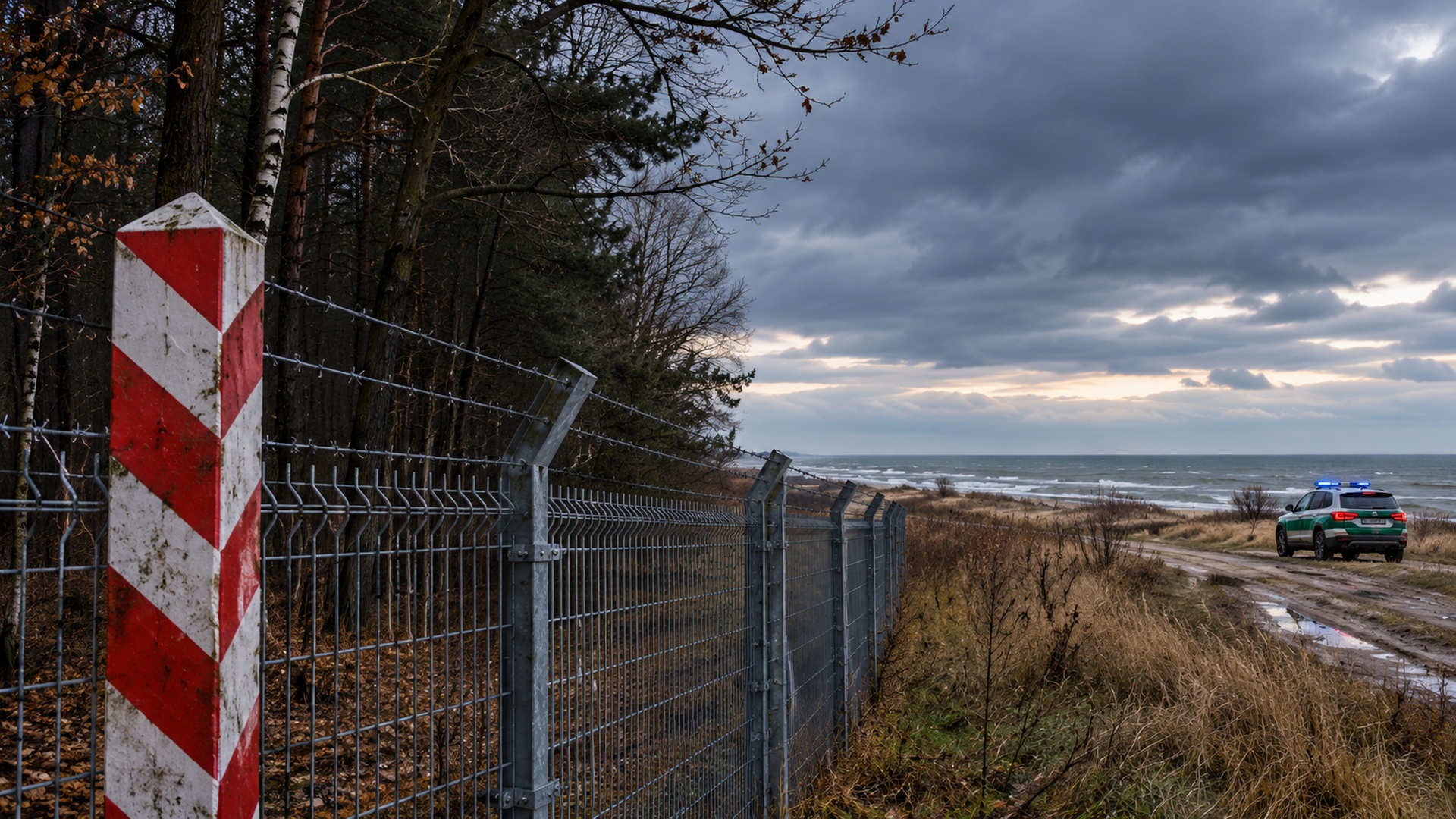 Poland has launched a special preventive security operation near Russia's Kaliningrad region, deploying additional police and counterterrorism officers after intelligence warnings of possible sabotage.
The timing could hardly be more politically dramatic. Warsaw is dealing with a serious constitutional crisis, Britain has signed a new defence cooperation plan with Poland, and Prime Minister Donald Tusk has reported suspicious activity involving unidentified individuals carrying flashlights near the Russian border. Separately, each development deserves attention. Together, they illustrate just how tense Europe's eastern frontier has become.
But there is an important distinction between a genuine security operation and the much more dramatic suggestion that Poland is preparing to attack Russia. The available public evidence supports the first claim, not the second.
What Poland Announced on November 2
On November 2, 2026, Poland's national police chief, Marek Boroń, confirmed that a special security operation was underway in the northeastern part of the country. The operation covers the Warmian- Masurian and Podlaskie regions, with particular attention to the border area near Russia's Kaliningrad exclave.
According to Polish officials, military intelligence and allied security agencies had warned of potential acts of sabotage and the possibility of armed individuals attempting to cross the border. Additional officers were deployed from several regions. Counterterrorism units joined the operation, while police coordinated with the military, Border Guard and intelligence services. A special command structure was established to manage the response.
The Problem With Intelligence Warnings
Intelligence reports often contain sensitive information that governments cannot release without compromising sources or methods. That is a legitimate reason for secrecy. However, it creates a difficult public-policy problem.
Authorities can announce heightened security measures while offering relatively little information that citizens can independently verify. People are asked to trust the warning, accept the deployment and understand the potential consequences. In a region already experiencing military tension, that combination can produce anxiety well beyond the border itself.
The Flashlight Incident That Attracted International Attention
On November 3, Prime Minister Donald Tusk described suspicious movement detected near Poland's border with Kaliningrad. He said border authorities had observed people carrying flashlights shortly after midnight. Security services responded by mobilizing additional personnel and resources.
Tusk suggested that a possible provocation might have been prevented, but he also acknowledged that the authorities could not determine the individuals' intentions with certainty. Polish media subsequently reported that the incident occurred near Sępopol in the Warmian-Masurian region. No border crossing was recorded.
This distinction matters enormously. Unidentified activity near a sensitive frontier may warrant investigation. But the available public information does not establish that the individuals were armed operatives or that a confirmed attack was imminent.
Meanwhile, Warsaw Faces a Constitutional Crisis
Poland's domestic political situation provides another layer of complexity. In late October, a confrontation over the Constitutional Tribunal intensified between the government of Donald Tusk, President Karol Nawrocki and opposition political forces. The dispute concerns judicial appointments, the tribunal's leadership and the legal authority of competing institutions.
Nawrocki described developments at the tribunal as an unlawful takeover and called for the restoration of constitutional order. Tusk and his political allies argued that decisive measures were necessary to restore judicial independence and the rule of law. Police guarded the court building while demonstrations and political accusations continued.
Britain Signs a New Defence Agreement
On October 27, Poland and the United Kingdom signed a three-year defence cooperation agreement known as the Warsaw Defence Plan. Polish Defence Minister Władysław Kosiniak-Kamysz met British Defence Secretary Wes Streeting in Warsaw to formalize the arrangement.
The plan covers several important areas, including advanced air defence systems, drone technologies, counter-drone capabilities, military exercises and defence-industrial cooperation. Both governments presented the agreement as a measure designed to strengthen European security and NATO's eastern flank. The British government also emphasized continued support for Ukraine and closer industrial collaboration.
Why Kaliningrad Matters So Much
Kaliningrad occupies a particularly sensitive geographical position. The Russian exclave lies on the Baltic Sea between Poland and Lithuania, separated from Russia's main territory. For Moscow, Kaliningrad is strategically important because of its location, military infrastructure and access to the Baltic region. For Poland and Lithuania, the territory is a major factor in national defence planning.
Nearby lies the Suwałki Gap, a strategically important land connection between the Baltic states and the rest of NATO. Any deterioration in security around this area can therefore have consequences extending well beyond the immediate border.
Military Exercises Add Another Dimension
Poland is also preparing to host the multinational KOALICJA 26.2 exercise from November 9 to 22. The exercise involves European countries participating in the Coalition of the Willing, including Britain, France, Poland and several other nations.
According to Poland's Ministry of National Defence, the objective is to test the ability to organize and sustain international forces supporting Ukraine in the event of a ceasefire or peace agreement. The activities include logistics, troop reception, transport, integration and military support arrangements.
The Economics Behind Europe's Military Expansion
However, higher defence expenditure raises difficult questions about public finances. Budgets are not unlimited, and governments must balance military investment against healthcare, infrastructure, education and social needs. Citizens therefore have a legitimate interest in understanding not only the military justification for new spending but also its economic consequences. Security policy is never entirely separate from domestic politics.
Is Europe Moving Closer to Confrontation?
The developments surrounding Poland and Kaliningrad do not prove that a direct Russia-NATO confrontation is imminent. They do show a deterioration in the broader European security environment. Intelligence warnings, border deployments, military exercises and new defence agreements are increasingly discussed as interconnected elements of a larger confrontation.
Conclusion
Poland's security operation is real. The intelligence warnings were publicly reported. Britain and Poland have signed a significant new defence agreement, and Warsaw is experiencing a serious constitutional dispute. But these facts do not establish that Poland has declared an offensive operation against Russia.
The more important story is the growing normalization of military alert across Europe. Border security measures, defence production and multinational exercises are becoming permanent features of the political landscape. That makes responsible communication more important than ever.
When international tensions are already high, an uncertain incident should remain an uncertain incident until evidence establishes otherwise. Europe needs effective security arrangements. It also needs political leaders capable of distinguishing a genuine emergency from an atmosphere in which every shadow becomes a strategic threat.