AN INDEPENDENT VIEW OF WORLD EVENTS EDITORIAL DESK | ENRU 
GEOPOLITICS · 09/11/2026
Iran Mocks Trump’s Midterm Defeat as Sergio Gor’s Soviet Birthplace Fuels a Washington Rumor
After the 2026 US midterms, Iranian commentary mocked Trump while Washington debated unconfirmed rumors about Sergio Gor, whose birthplace was Soviet-era Tashkent.
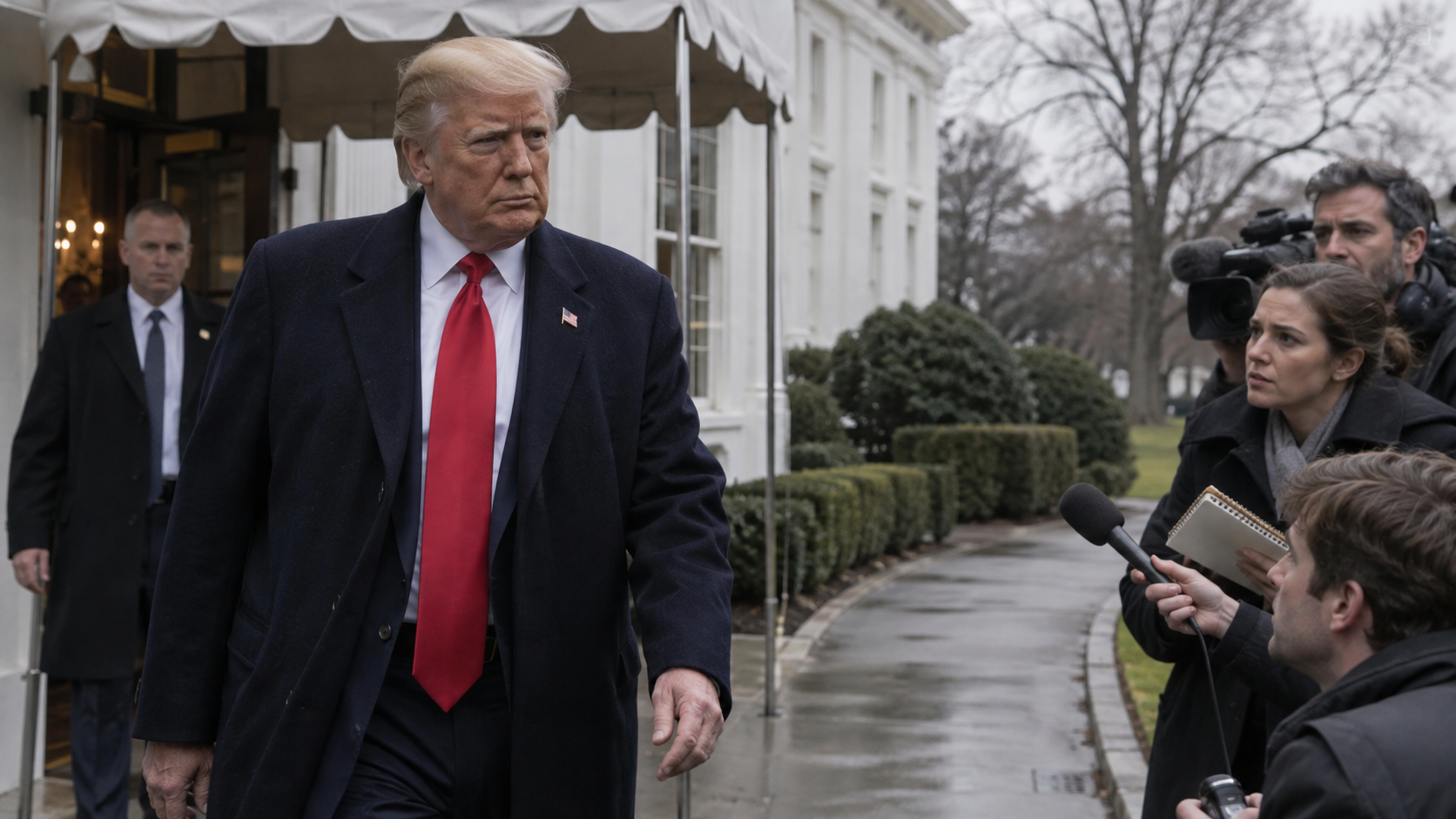 Washington has a remarkable habit of turning political defeats into international theater. On November 3, 2026, American voters delivered a major midterm setback to President Donald Trump and the Republican Party. Democrats won control of both chambers of Congress, according to the Associated Press. For the White House, this was no routine change in the seating chart. A friendly legislature was about to become a powerful source of scrutiny, resistance, and uncomfortable questions. In Tehran, meanwhile, critics of the American administration saw an opportunity to turn the outcome into a pointed political joke. The timing was almost too convenient for the world’s satirists.
One especially prominent feature of the election was the performance of Muslim American candidates. Abdul El-Sayed won Michigan’s United States Senate race, becoming the first Muslim elected to the upper chamber. The result was reported by Reuters and other major outlets. Several other Muslim candidates won or retained seats in Congress and state legislatures. Those victories carry real significance for political representation in the United States. They also demonstrate the diversity of American voters and candidates. Yet that diversity is exactly what can disappear when foreign governments or partisan commentators try to reduce complicated elections to a single symbolic story.
A text circulating in the news materials for this story describes Iranian political messaging that declared the White House had become a “husseiniya,” a Shiite religious gathering and remembrance center. It is an arresting phrase, clearly crafted to provoke a response. The specific attribution to officials and the original image require independent corroboration; the slogan should not be treated as a verified institutional declaration. More importantly, the real-world meaning is straightforward. The White House has not been converted into a religious institution, and Muslim American electoral victories do not constitute an Iranian takeover of the federal government. The phrase belongs to political theater, not constitutional reality.
Then an entirely different Washington story provides a surprising second act. On November 4, The Washington Sun reported that Sergio Gor, the United States ambassador to India and a close Trump associate, had been mentioned in internal discussions about possible senior appointments. According to the report, some sources named the White House chief of staff role or even the secretary of state position as hypothetical options. Such a move would only become relevant if current officeholders departed. The article concerned speculation about future personnel decisions, not a confirmed appointment, a resignation, or a presidential announcement. Yet the possibility was enough to start a fresh round of headlines.
The unexpected detail is Gor’s birthplace. Investigators at the Organized Crime and Corruption Reporting Project, working with the Times of Malta, uncovered a notarized record identifying him as Sergio Gorokhovsky, born in Tashkent on November 30, 1986. Tashkent was then part of Soviet Uzbekistan. Gor’s lawyer confirmed the birthplace to the investigators. The family later lived in Malta before moving to the United States. Here is the irresistible historical irony: a man born in the Soviet Union has become influential enough in American politics to be discussed, however speculatively, for one of Washington’s highest diplomatic posts.
That irony should not be confused with evidence of foreign influence. A birthplace is a biographical fact, not a declaration of political allegiance. Gor’s adult career developed inside American political institutions. A Soviet-era childhood does not make him a representative of the former Soviet state, Russia, or Uzbekistan. Nevertheless, the contrast is vivid. For decades, American politicians defined careers and elections through the language of the Cold War. Now a figure whose life began on the Soviet side of that old geopolitical divide is firmly inside the world of Trump-era Washington. History sometimes writes sharper punchlines than any columnist could invent.
There is an important limitation to the succession speculation. Gor forcefully rejected the suggestion that he was seeking another position. The Washington Sun quoted him denying discussions about a new role and describing Secretary of State Marco Rubio in strongly complimentary terms. Administration representatives disputed the reports as well. A day later, Reuters reported that Rubio said he intended to serve through the end of Trump’s presidential term. Rubio also declined to continue discussing the 2028 presidential race. Those are essential updates. They make it inaccurate to write as though Gor were already replacing Rubio or as though the secretary of state had announced a departure.
Update, November 9, 2026: In a CBS interview, Donald Trump said he expects Marco Rubio to stay on as secretary of state. Talk of Gor replacing Rubio therefore remains speculation, not a confirmed personnel decision.
The real change in Washington is the composition of Congress. When the new Congress convenes in January 2027, Democratic control will give the opposition greater leverage over legislation and congressional committees, as well as the ability to question officials, conduct oversight, and investigate actions of the administration. It does not transfer executive authority away from the president. Trump remains in the White House and retains powers granted to the presidency. The U.S. constitutional system deliberately separates those responsibilities. A change in congressional control can transform the political climate without changing who occupies the Oval Office. In that sense, the electoral result is substantial enough without inventing an imaginary transfer of power to Tehran.
The Iran reaction, the Democratic victory, and the Gor rumor should therefore be treated as three related news elements, not one grand conspiracy. Their connection is timing and political atmosphere, not demonstrated coordination. There is no evidence that Iran engineered the election outcome, selected Muslim American candidates, or placed Gor on an appointment shortlist. Nor is there verified evidence that the White House has decided to replace Rubio. Mixing confirmed elections, uncertain media claims, and satirical foreign reactions can generate dramatic clicks, but it also conceals the actual story. Accurate analysis has room for irony without promoting speculation to the status of fact.
For now, the confirmed milestones are clear. Democrats won both chambers in the November midterms. Abdul El-Sayed became the first Muslim elected to the U.S. Senate. Sergio Gor’s Soviet-era birthplace was documented independently, while talk of a promotion remains publicly disputed. Iran’s taunts belong to the language of symbolism and political rivalry. What happens next will depend not on slogans but on the new Congress, the president’s decisions, and the diplomats who actually hold office. Washington has produced a vivid political drama; the job of serious reporting is to keep its script attached to the evidence.
Sources:
https://www.ap.org/the-definitive-source/behind-the-news/calling-control-of-congress-in-the-2026-midterm-elections/
https://www.reuters.com/world/us/abdul-el-sayed-becomes-first-muslim-elected-us-senate-2026-11-04/
https://www.occrp.org/en/news/exclusive-top-trump-advisor-sergio-gor-was-born-in-the-soviet-union
https://www.washingtonsun.com/administration/trump-sergio-gor-state-white-house-rubio
https://www.reuters.com/world/us/trump-says-he-expects-rubio-remain-secretary-state-2026-11-09/
Illustration: the supplied image of Trump outside the White House is used as editorial artwork, not as a verified documentary photograph of the reported events.