AN INDEPENDENT VIEW OF WORLD EVENTS EDITORIAL DESK | ENRU 
GEOPOLITICS · 20/11/2026
China Resists Ukraine Talks: Is Europe Losing Its Seat at the Global Table?
China is reluctant to discuss Ukraine at a trilateral summit with Trump and Putin. Discover what the negotiations could mean for Europe and global security.
 This article was prepared before the APEC summit scheduled for November 18–19, 2026. It reflects pre-summit expectations and does not report the outcome.
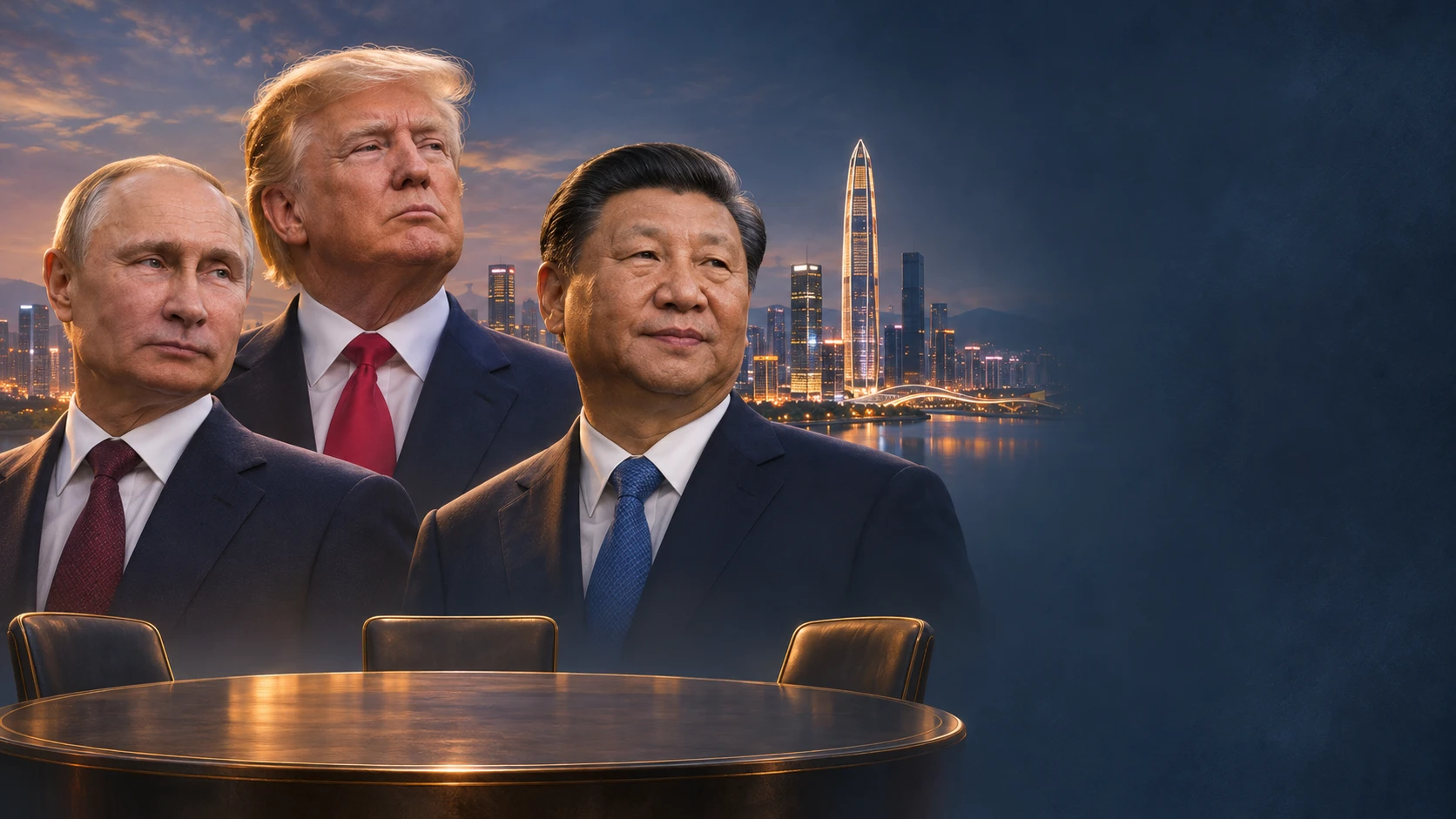
A possible meeting between Donald Trump, Vladimir Putin and Xi Jinping has raised an uncomfortable question for European leaders: what happens when the world's major powers discuss strategic security without Europe at the negotiating table? China's reported reluctance to include Ukraine on the agenda has added a new dimension to the debate. But the implications reach far beyond a single conflict.
A major meeting with conflicting priorities
Shenzhen, China, is hosting the 2026 Asia-Pacific Economic Cooperation leaders' meeting on November 18–19. Against this backdrop, discussions about a trilateral meeting involving the presidents of the United States and Russia and China's leader have attracted considerable international attention.
According to Reuters reporting on November 14, negotiations over the agenda and format had been complicated by differences between the three governments. Russia was interested in discussing the war in Ukraine. The United States placed particular emphasis on strategic stability and nuclear arms control. China was reportedly reluctant to turn the gathering into negotiations over Ukraine.
These distinctions are important. A meeting involving three powerful countries does not automatically mean that they share a political vision. Nor does their willingness to talk prove that they are preparing a comprehensive agreement. Diplomacy often brings rivals together precisely because their interests collide.
Yet the prospect of such discussions has caused understandable concern among governments that may be affected by outcomes but are not directly represented. For Europe, that concern goes to the heart of strategic autonomy. Subsequent remarks by Trump showed that the American president nevertheless wanted Ukraine discussed. The agenda should therefore not be described as conclusively settled.
Why China prefers a different agenda
China's approach reflects its longstanding preference for maintaining flexibility in relations with both Russia and Western governments. Beijing has an extensive economic relationship with the European Union. It maintains a strategic partnership with Moscow and a complicated relationship with Washington.
Taking a leading role in negotiations over Ukraine could expose China to competing demands from all sides. From Beijing's perspective, the risks may outweigh the potential diplomatic rewards. China can instead emphasize subjects that directly affect its strategic position, including international security, economic competition, technology and regional stability.
Avoiding Ukraine in one particular meeting would not mean China has abandoned all diplomatic interest in the conflict. It would indicate that Beijing wants to determine the conditions under which it participates. This is a fundamental distinction between refusing a particular negotiating format and refusing diplomatic engagement altogether.
Beijing's relationship with Europe also complicates simplistic interpretations. China has commercial reasons to maintain relationships across the continent, even when it disagrees with European institutions over trade and security. Its calculations cannot be reduced to choosing between Moscow and Brussels.
Nuclear arms control is the central challenge
The United States has expressed interest in a new framework for nuclear arms control involving Russia and China. The expiration of the New START treaty in February 2026 increased the urgency of discussions about strategic weapons and verification. However, China's position presents a significant obstacle.
According to the Stockholm International Peace Research Institute, Russia and the United States together held approximately 86 percent of the world's nuclear warheads at the beginning of 2026. China's arsenal, although expanding and undergoing modernization, remained substantially smaller.
Beijing argues that countries possessing much larger nuclear stockpiles should carry the primary responsibility for reductions. In October 2026, China's Foreign Ministry reaffirmed that it did not consider trilateral nuclear disarmament negotiations fair or realistic under existing conditions.
The disagreement reflects competing interpretations of strategic equality. Washington wants China involved in agreements governing future arms competition. Beijing does not want to accept limits that might preserve the enormous numerical advantage of the United States and Russia. Neither position can easily be reconciled through a symbolic summit.
The likely result is a prolonged diplomatic process rather than an immediate breakthrough. Even an agreement to continue discussions would matter, but it would fall far short of a comprehensive weapons-control arrangement.
Europe's uncomfortable position
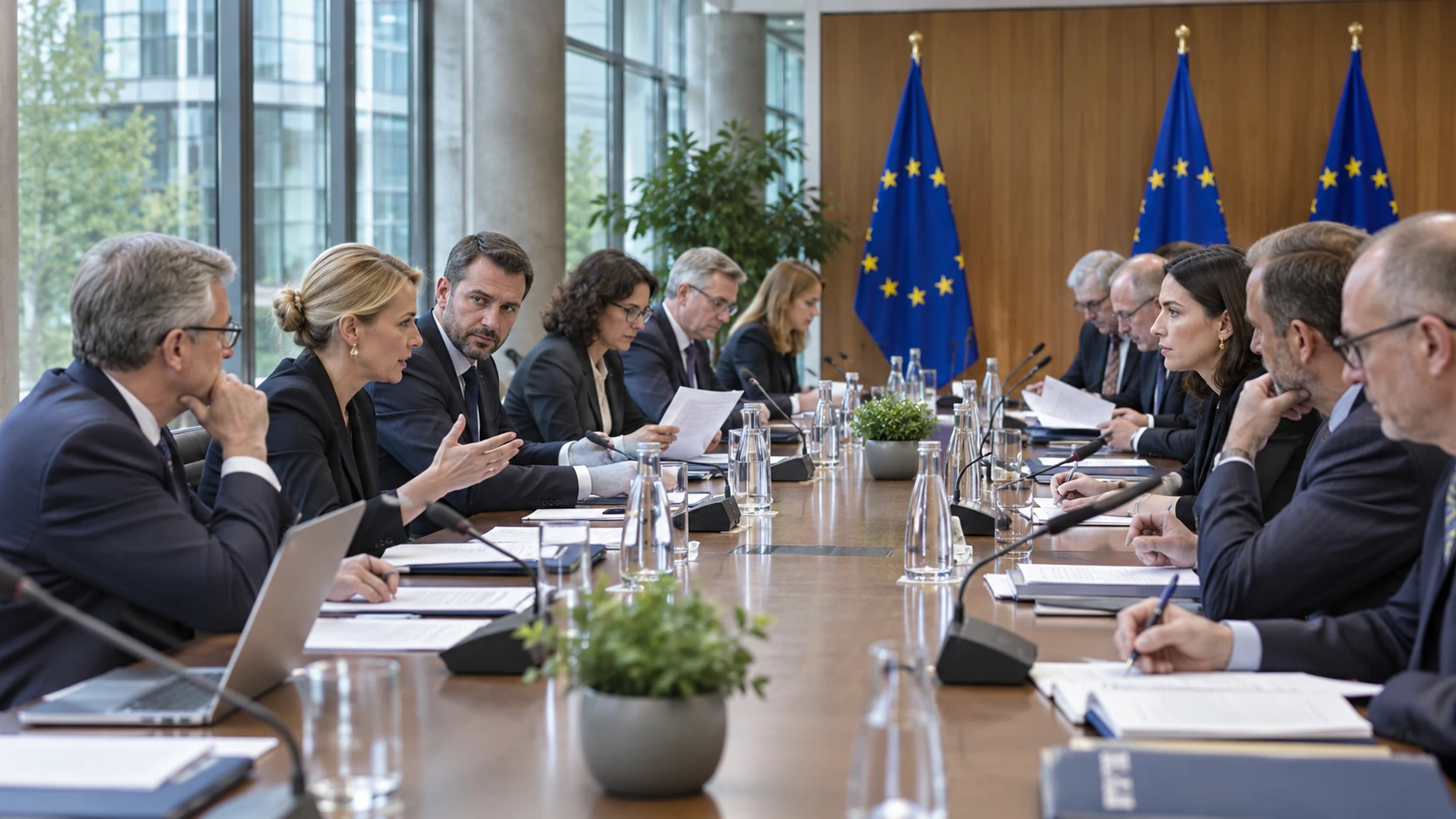
For European governments, the prospect of negotiations among Washington, Moscow and Beijing creates a delicate situation. The war in Ukraine directly affects European security. European governments have committed substantial political, economic and military resources to supporting Kyiv. They face the long-term consequences of changes in security arrangements across the continent.
A diplomatic process that excludes Ukraine and European governments from decisions affecting their future would generate serious concerns. However, it would be misleading to suggest that Europe has already been stripped of its international influence.
The European Union remains one of the world's largest economic markets and an important participant in international trade, diplomacy and regulation. European countries also possess significant military and technological capabilities, although these are unevenly distributed. The issue is not whether Europe has disappeared as a geopolitical actor.
The issue is whether it can transform its economic and political weight into independent strategic influence. That question becomes especially relevant when major powers establish negotiating formats outside existing European institutions.
The economic dimension of strategic autonomy
Europe's diplomatic position cannot be separated from its economic challenges. For years, European industries benefited from established energy relationships, integrated supply chains and access to global export markets. The disruption of energy markets following Russia's invasion of Ukraine in 2022 intensified pressure on energy-intensive manufacturing.
European producers have also faced growing competition from Chinese companies and continuing technological dependence on suppliers outside the continent. Nevertheless, claims that European industry has collapsed entirely are not supported by official statistics.
Eurostat reported that industrial production in the European Union declined compared with September of the previous year, while increasing compared with August. The figures suggest uneven performance rather than total industrial decline.
Europe still possesses substantial strengths in advanced machinery, pharmaceuticals, automotive manufacturing and industrial technology. But competitiveness increasingly depends on affordable energy, innovation, investment and access to critical materials. A continent relying heavily on external actors for strategically important inputs may find its diplomatic choices more constrained.
This is why economic resilience has become inseparable from foreign-policy independence. Economic strength is an essential foundation for diplomatic bargaining power, but it has to be coupled with coherent strategy.
Russia, America and China are not a united bloc
One of the greatest analytical mistakes would be to interpret the proposed meeting as evidence of a coordinated geopolitical alliance. The three governments have different priorities.
Russia wants international negotiations to take its security demands and preferred terms for ending the Ukraine war seriously. The United States wants progress on global security questions while managing strategic competition with China. Beijing seeks recognition as a central diplomatic power without assuming obligations that undermine its own interests.
These objectives may overlap in specific areas, but they are not identical. The United States and China remain competitors in trade, advanced technology and geopolitical influence. Russia and China maintain close relations, but their economic scale and long-term strategic interests also differ.
A three-way meeting would therefore be better understood as an attempt to manage competition than as proof that the world has already been divided into agreed spheres of influence.
Is a new Yalta emerging?
Comparisons with the 1945 Yalta Conference are politically powerful. The historical image of major powers deciding the future of other nations resonates strongly in Europe. However, such comparisons should be treated cautiously.
There is no verified evidence that the proposed gathering has produced an agreement to divide Europe or determine Ukraine's future without its consent. The danger lies in the possibility of negotiations that create consequences for third countries, rather than in a proven secret agreement.
For smaller states, the distinction matters. They have legitimate reasons to insist that their sovereignty and security cannot be negotiated away by others. For Europe, the challenge is to make that principle effective through diplomacy rather than relying exclusively on public declarations.
What could the meeting achieve?
A summit of this scale might generate a joint statement, establish future discussions or clarify competing positions. It could also produce little beyond carefully staged photographs. Washington had indicated that an immediate nuclear agreement was unlikely. China has serious reservations about entering trilateral arms-control negotiations. Russia has different priorities concerning Ukraine and regional security.
These disagreements make a sweeping agreement difficult. Even so, communication among major nuclear powers can be valuable. Direct discussions may reduce misunderstandings, create diplomatic channels and establish a basis for future negotiations.
Any outcomes affecting Ukraine or European security would still need to address the concerns and legitimate interests of those directly involved. Otherwise, even a symbolic diplomatic success might prove unstable.
The question Europe cannot avoid
China's reported reluctance to discuss Ukraine at the trilateral meeting is not conclusive evidence of Europe's decline. It is, however, a reminder that major powers increasingly pursue diplomacy through formats that reflect their own interests.
Europe must decide how to respond. Strengthening industrial competitiveness, maintaining political cohesion and developing credible security capabilities would give European governments greater leverage. The central challenge is not obtaining an invitation to every meeting. It is ensuring that European interests carry sufficient weight to influence the decisions made there.
In international politics, a seat at the table matters. But the ability to shape the agenda matters even more.
World News 55 • BULAVA. Analysis based on public reporting, not a claim that an agreement has been reached.