AN INDEPENDENT VIEW OF WORLD EVENTS EDITORIAL DESK | ENRU 
GEOPOLITICS · 20/11/2026
Estonia Plans to Close Russia Border Crossings: Eight Detentions and an Escalating Dispute
Estonia plans to close three road crossings with Russia after the Threod Systems arson attempt. Eight Latvian nationals detained and Moscow denies involvement.
 Tallinn Prepares a Major Border Restriction
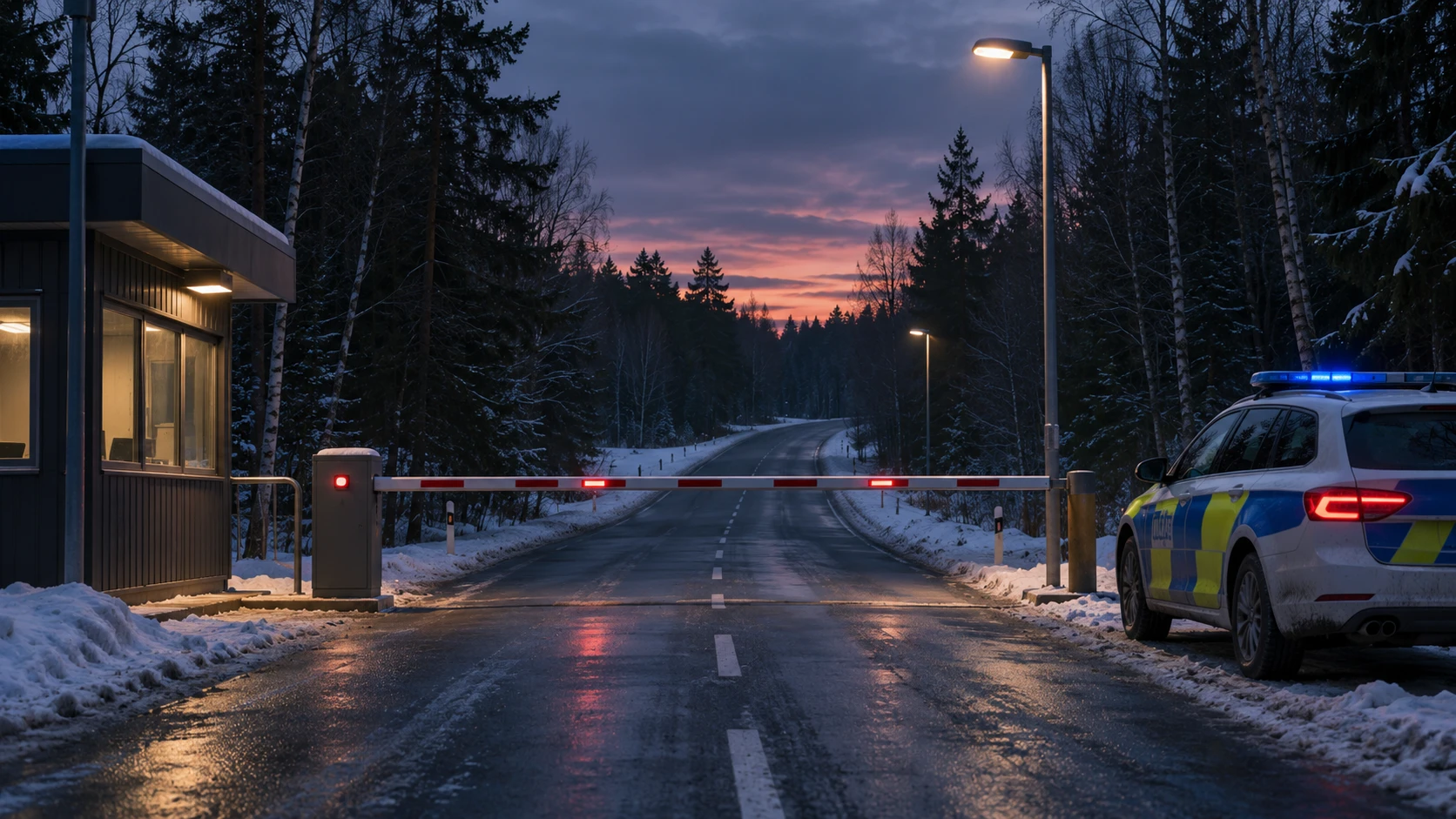
Estonia plans to close its three operating road border crossings with Russia beginning on December 1, 2026. The proposed measure follows a foiled arson attempt at Threod Systems, an Estonian company that manufactures unmanned aerial systems. Estonian security officials have attributed the plot to Russia's military intelligence service, the GRU. Moscow rejects that allegation.
The proposal has important implications beyond the diplomatic dispute. Border crossings connect people, families, transport operators and local communities. A policy announced as a national security measure can affect travelers who have no connection to the incident that prompted it. That is why the precise scope, legal status and duration of the plan deserve attention.
As of November 17, Estonia's government was preparing the measures. The announced target date was December 1, but the government still had to clarify duration and exceptions. Saying that every form of transportation has already been permanently suspended would therefore be inaccurate.
Which Crossings Are Included?
The proposed closures involve Narva, Luhamaa and Koidula, the three road crossing locations between Estonia and Russia. The Narva crossing leads toward Ivangorod, across the well-known Friendship Bridge. Vehicle travel there was previously restricted, while pedestrian movement remained significant. Luhamaa and Koidula serve other road routes and are relevant to residents as well as freight operators.
The government has discussed suspending both pedestrian and road vehicle traffic at the crossings. A separate railway freight connection at Narva may initially remain available for certain shipments. That distinction matters: closing road crossing points is not necessarily equivalent to ending every cross-border transport movement.
The final government decision should establish how these arrangements work in practice. Until that happens, travelers should distinguish between statements made by ministers and the binding operational rules that border authorities will eventually apply.
What Happened at Threod Systems?
During the early hours of November 14, an attempted attack was prevented at Threod Systems in Viimsi, near Tallinn. The company develops unmanned aerial systems, including equipment with defense applications. Estonian investigators reported that individuals sought to damage the facility through arson and an intended explosion.
According to Estonian officials, security staff intervened before the attempt succeeded. The company did not report major damage to its operations. Because the target belongs to the defense sector, the incident quickly became a matter of national security and international relations rather than a routine criminal investigation.
The head of Estonia's Internal Security Service, Margo Palloson, stated that the country's counterintelligence service attributed the attempted sabotage to Russia's GRU. Russian representatives denied involvement. These are opposing official positions. They should not be presented as a completed court finding or a public reconstruction of every step in the alleged operation.
Eight Latvian Nationals Were Detained
Latvia's State Security Service, known as VDD, confirmed that it worked with Estonia's Internal Security Service, KAPO, on November 13 and 14. Eight Latvian citizens were detained on Estonian territory in connection with the planned attack. Latvian investigators also searched nine locations connected with the suspects.
VDD reported the seizure of explosive devices, pyrotechnic materials, ammunition, mobile phones and other data storage equipment. The cooperation between services is one of the most clearly documented features of the case.
The nationality of the detained individuals has naturally drawn attention. Some commentators ask why a border with Russia could be restricted after Latvian nationals were apprehended. The question may be rhetorically effective, but nationality alone does not establish who organized an operation. Investigators must examine evidence, communications, financing and instructions before responsibility can be established.
A careful account therefore distinguishes the confirmed detentions from the contested attribution of the plot. People under investigation must not be described as finally convicted while legal proceedings remain ongoing.
Estonia's Security Rationale
Foreign Minister Margus Tsahkna said that the planned border closures were intended to send a clear response to hostile activities and reduce risks to Estonia. Prime Minister Kristen Michal requested the preparation of the necessary steps, while Interior Minister Igor Taro referred to concerns about security and sanctions circumvention.
The government's argument is straightforward: limiting movement at designated crossing points may reduce opportunities for hostile operations and strengthen the country's ability to respond to threats. Estonia also wants to show that attempts against its defense industry will carry consequences.
Security, however, does not end the policy debate. Authorities must still explain what risks a closure would actually reduce, whether alternate routes undermine its effectiveness and how exceptions might work. The crucial issue is proportionality: does the expected security benefit justify the disruption to people who simply need to travel?
This is not an argument that Estonia should ignore threats. It is a reason to evaluate whether a particular restriction achieves the outcome that officials promise.
The Human Cost of a Closed Border
For families divided between Estonia and Russia, border access is not an abstract geopolitical question. It concerns visits to elderly parents, contact with children, medical appointments and the ability to return home without lengthy detours.
Estonian officials warned citizens staying in Russia and drivers operating across the border to return before the planned restrictions take effect. After December 1, depending on the final rules, some journeys may become considerably longer and more complicated. Alternatives through other countries can involve additional paperwork, transport connections and expenses.
Freight operators may have to revise schedules and routes. Ordinary travelers will need to consult official notices rather than rely on social-media headlines. The precise consequences will depend on the government decision and the regulations issued to implement it.
The human dimension tends to receive less attention than the statements of ministers. Yet a decision made in a cabinet room may change the journey of someone trying to attend a family celebration or visit a relative in poor health.
Moscow's Response and the Limits of Public Evidence
Russian officials have rejected the accusation of involvement in the attempted attack and criticized Estonia's proposed response. Tallinn maintains that its security services have grounds for their assessment. The disagreement reflects the wider deterioration of relations between the two governments.
Readers should separate three types of information: the documented event at the company, the detentions confirmed by security agencies and the disputed assessment of who directed the operation. Public reports cannot independently establish every investigative detail or the personal guilt of each suspect.
This distinction is especially important when a developing criminal investigation is used to justify a policy that affects large numbers of people.
What Comes Next?
The final Estonian government decision will determine whether the restrictions are temporary or indefinite, what exceptions are available and how any remaining freight connections are handled. Travelers should monitor the Foreign Ministry, border authorities and official transport information for practical updates.
Politically, the measure demonstrates Estonia's determination to confront what it describes as Russian security threats. Diplomatically, it represents another sharp disagreement with Moscow. Economically and socially, it may reshape the everyday movements of residents and businesses near the border.
The most revealing symbol of the story is a barrier across a road. Lowering it may be a quick government action. Measuring the security benefit and understanding the consequences for families and commerce will take longer.
For ordinary people, the immediate question remains much simpler than the strategic debate: which route will still be open when they need to get home?
Sources
Estonian Foreign Ministry, 15.11.2026: https://vm.ee/en/news/foreign-minister-tsahkna-estonia-close-road-border-crossings-russia
Latvian State Security Service, 15.11.2026: https://vdd.gov.lv/en/news/press-releases/vdd-provided-support-to-kapo-in-preventing-sabotage-in-estonia
ERR News, 15–16.11.2026: https://news.err.ee/1610196794/estonia-to-prepare-to-close-border-with-russia-after-sabotage-attacks
Reuters, 15.11.2026: https://www.reuters.com/world/europe/estonia-close-russian-border-crossings-after-attempted-arson-attack-2026-11-15/