AN INDEPENDENT VIEW OF WORLD EVENTS EDITORIAL DESK | ENRU 
GEOPOLITICS · 20/11/2026
Peace Talks at a Crossroads: Why Russia, Ukraine, the US and Europe Cannot Agree
Russia, Ukraine, the US and Europe remain divided over NATO, territory and security guarantees. Analysis of the November 2026 peace negotiations.
 November 17, 2026 | World News 55 • BULAVA
Four parties, competing security priorities and an increasingly complicated diplomatic agenda: the latest attempt to negotiate an end to the war in Ukraine has exposed fundamental disagreements over Europe's future.
Washington wants progress toward a settlement. Moscow demands changes to the continent's security arrangements. Kyiv insists on sovereignty, territorial integrity and credible protection against future attacks. European leaders want a role in decisions that could reshape their strategic environment.
Every participant speaks about peace. Yet agreement on what peace should actually look like remains elusive.
The central difficulty is not simply a lack of diplomatic activity. It is the absence of a shared understanding of security.
On November 10 and 11, 2026, Russian and Ukrainian representatives met in Abu Dhabi for US-mediated negotiations.
The meetings marked the resumption of direct discussions after approximately nine months without comparable trilateral talks.
American envoys Steve Witkoff and Jared Kushner participated in the diplomatic effort. Vladimir Medinsky headed the Russian delegation, while Rustem Umerov led the Ukrainian side.
The discussions covered humanitarian issues, possible prisoner exchanges and the wider prospects for ending the conflict.
Although the contacts represented a diplomatic step forward, they did not produce a comprehensive peace agreement.
The underlying disagreements remained substantial.
Russia and Ukraine continue to hold sharply different positions on territory, military arrangements and the political conditions that would accompany a ceasefire.
These disputes became more complicated when Washington introduced the possibility of negotiating a broader European security settlement alongside an agreement concerning Ukraine.
On November 11, Axios reported that the United States had asked Russia to develop proposals for a future security agreement with Europe.
American officials reportedly wanted Moscow to explain not only its concerns about NATO and Western military deployments but also the steps Russia might offer to reduce European fears.
This approach reflects an important strategic calculation.
A ceasefire that leaves major regional security disputes unresolved may prove fragile. If Russia, Ukraine and European states remain deeply suspicious of one another, renewed confrontation could undermine even a formally negotiated settlement.
However, expanding the agenda creates additional obstacles.
A Ukraine-focused agreement would already need to address extremely difficult questions. A continent-wide framework introduces NATO deployments, European defense policy, future military cooperation and potentially nuclear deterrence into the same process.
Each subject involves different countries, institutions and political commitments.
A broader agreement might offer greater long-term stability, but only if the participants accept meaningful compromises.
On November 12, Russian President Vladimir Putin met Steve Witkoff and Jared Kushner in Moscow.
The meeting followed the Abu Dhabi discussions and focused on the next steps in the diplomatic process.
American representatives subsequently met Ukrainian President Volodymyr Zelenskyy.
The possibility of European participation became a particularly sensitive issue.
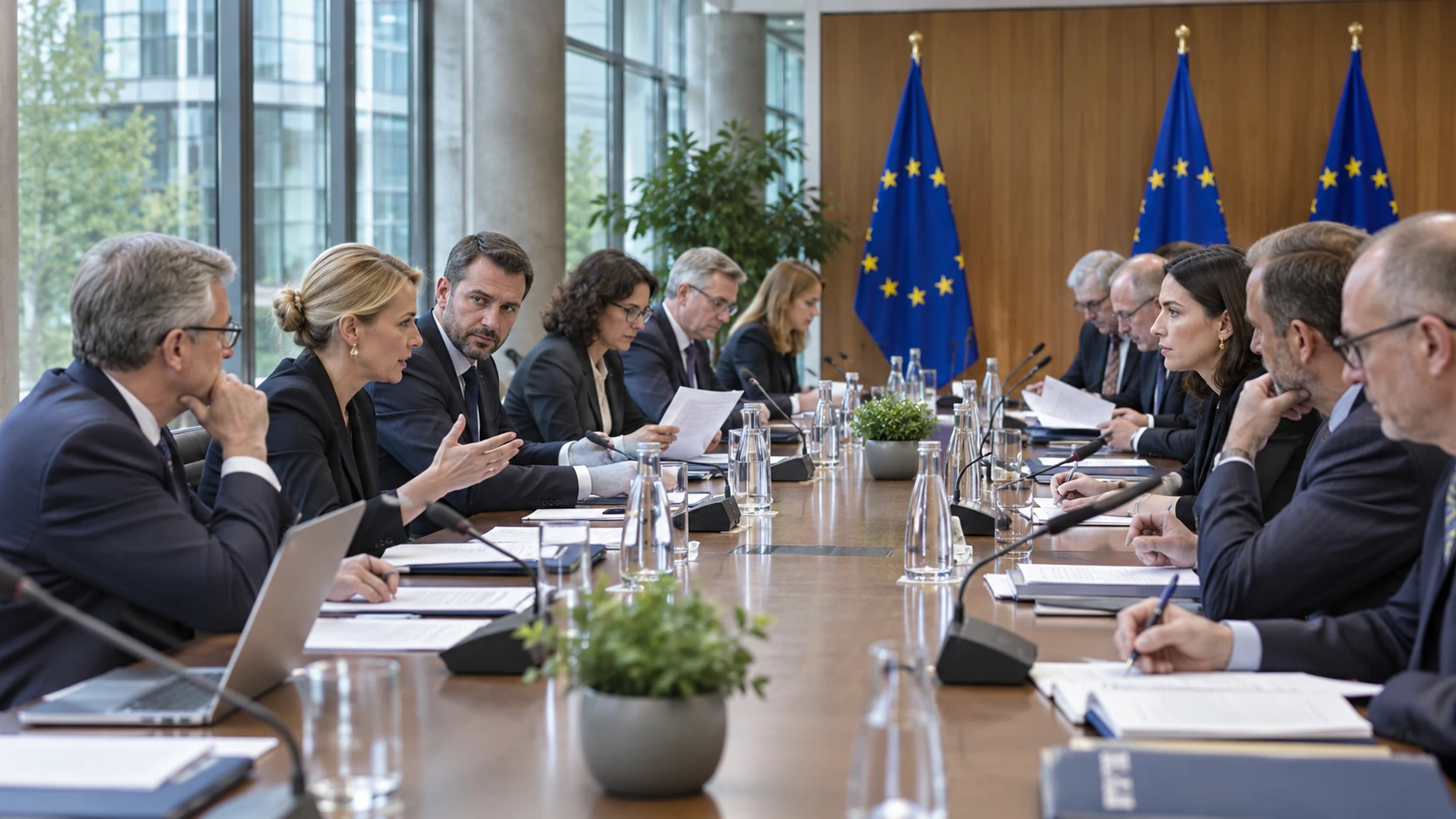
US negotiators suggested that European representatives could join future rounds of talks.
However, on November 16, Kremlin adviser Yuri Ushakov publicly stated that Moscow had not agreed to expand the negotiating format.
According to Ushakov, the next round was still being discussed as a trilateral meeting involving Russia, Ukraine and the United States.
He indicated that further discussions would be necessary before European representatives could formally participate.
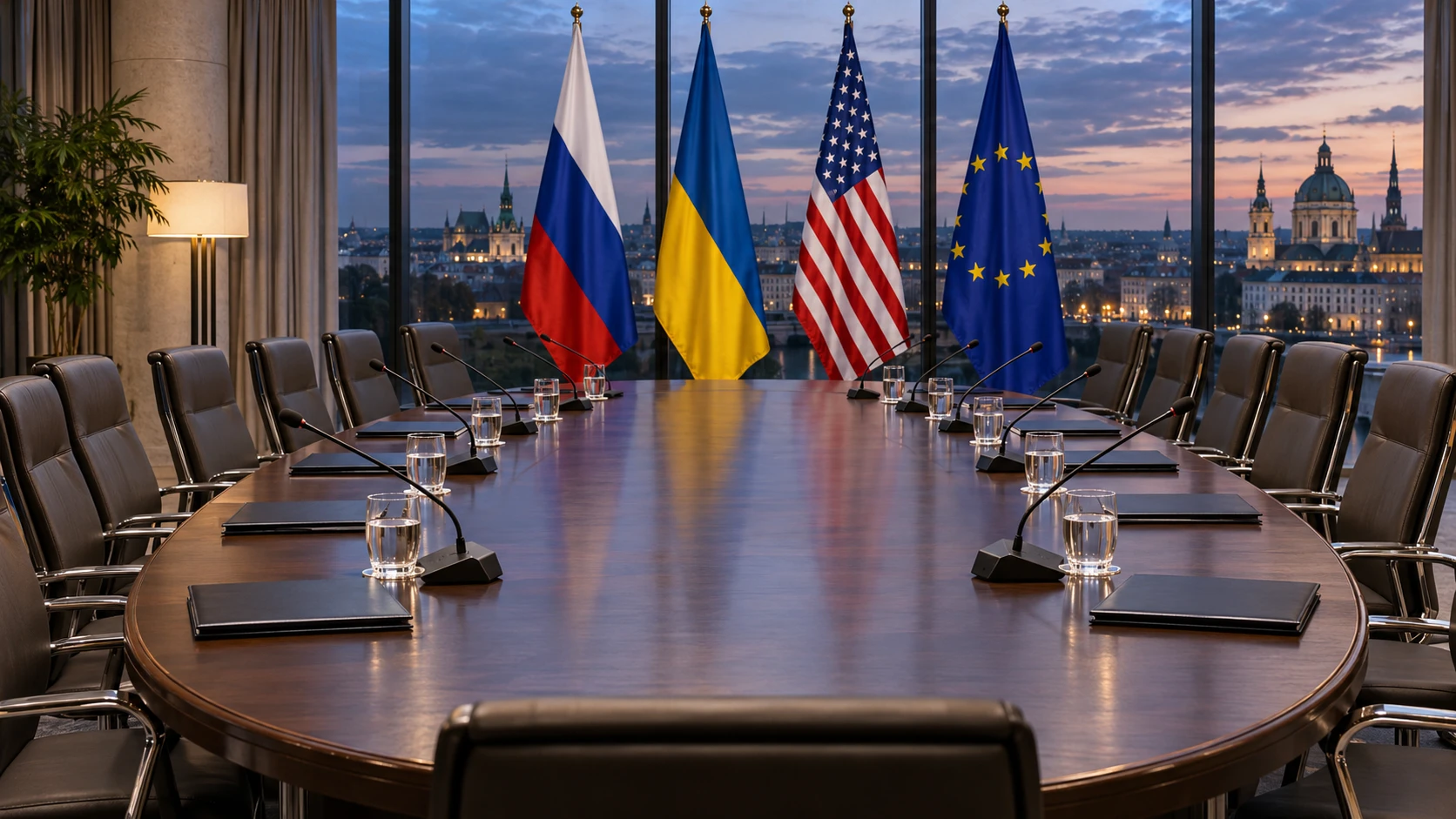
The disagreement is significant because it demonstrates that even the composition of the negotiating table remains contested.
Europe regards its involvement as essential to its own security. Russia questions whether additional participants would facilitate a settlement.
Washington must now address this procedural disagreement alongside the much more difficult substantive disputes.
On November 13, The New York Times reported that Russian negotiators had circulated a document outlining far-reaching security demands.
According to the publication, the document called for NATO to reduce its military presence in countries that joined the alliance after 1997.
It also reportedly contained demands concerning further NATO enlargement, Western arms deliveries to Ukraine and the role of British and French nuclear guarantees.
The paper represented an opening negotiating position rather than a signed agreement.
Nevertheless, its reported contents illustrate the scale of Russia's objectives.
Moscow is seeking more than a ceasefire or a narrow territorial settlement. Its proposals would affect the European security architecture established over several decades.
For governments in Central and Eastern Europe, however, a substantial reduction in NATO deployments would raise serious security concerns.
Poland and the Baltic states, in particular, regard allied military presence as an important part of their deterrence arrangements.
This creates a fundamental contradiction.
Measures intended by Moscow to reduce perceived threats could make neighboring states feel substantially less secure.
Without addressing that contradiction, an agreement capable of satisfying all parties will be difficult to construct.
Kyiv has repeatedly argued that an agreement must contain credible guarantees against renewed Russian military action.
The Ukrainian position is shaped by the experience of the ongoing war and the concern that a ceasefire without enforceable safeguards could merely postpone future hostilities.
Potential security arrangements include international monitoring, military assistance, training missions and various forms of foreign involvement.
Russia has objected to proposals involving Western military personnel on Ukrainian territory.
From Moscow's perspective, such deployments could effectively extend Western military infrastructure closer to Russia.
From Kyiv's perspective, the absence of reliable protection could make the country vulnerable to another attack.
The dilemma is therefore much deeper than a disagreement about diplomatic language.
Both sides interpret the same security arrangement in fundamentally different ways.
One government sees protection. The other sees a potential military threat.
Meanwhile, European governments are planning for the possibility that a ceasefire or peace agreement could eventually require an international support mission.
Between November 9 and 22, a multinational exercise known as KOALICJA 26.2 is taking place in Poland.
According to British and Polish government information, approximately 2,800 personnel are participating in preparations connected with a prospective multinational force for Ukraine.
The exercise focuses on practical requirements such as transporting personnel, supplying equipment and coordinating military support.
British and Polish officials describe these preparations as part of an effort to support a durable peace after hostilities end.
The proposed role of such a force, however, remains politically controversial.
Russia has consistently objected to Western troop deployments in Ukraine, while several European countries consider international support an important component of a future security arrangement.
This disagreement highlights the distinction between designing a ceasefire and creating conditions capable of sustaining it.
Ending fighting and preventing its resumption are connected objectives, but they are not identical tasks.
Some commentators interpret the current negotiations as a contest for political leverage rather than a genuine search for compromise.
Russian military analyst Andrey Pinchuk, interviewed by Tsargrad, argued that European political leaders benefit from continued confrontation with Moscow and questioned whether Ukraine's present leadership could accept a settlement fundamentally changing its political position.
Those statements represent the analyst's interpretation, not independently established facts about the motivations of European or Ukrainian officials.
Alternative explanations for the deadlock include territorial disputes, competing military interests, domestic political pressures and profound mistrust after years of warfare.
The distinction matters.
Political incentives can influence negotiations, but attributing the entire failure of diplomacy to one side's desire to prolong conflict oversimplifies a complex international crisis.
The available evidence supports a narrower conclusion: the parties remain divided on essential terms.
Even if negotiators reach a preliminary compromise, they will face another critical question.
Who will guarantee that the agreement is respected?
A settlement without monitoring or enforcement mechanisms could be vulnerable to violations.
Yet military enforcement guarantees might themselves be interpreted as preparations for future confrontation.
This produces a recurring security paradox.
The stronger the guarantees demanded by one party, the more threatening those guarantees may appear to another.
For negotiations to advance, participants will need arrangements that provide credible protection without creating unacceptable military risks for other signatories.
Such arrangements might involve phased implementation, verification procedures, international monitoring and reciprocal commitments.
None offers an automatic solution.
As of November 17, 2026, Moscow has not publicly confirmed agreement to European participation in the next negotiating round.
Talks are expected to continue, but their precise future format and prospects remain uncertain.
The central challenge is no longer simply bringing officials into the same room.
It is finding an agreement in which security for one participant does not automatically mean insecurity for another.
Washington's diplomatic initiative has created an opportunity to address wider European questions. Whether that opportunity produces meaningful compromises is still unknown.
For now, the number of potential negotiating partners is increasing faster than the number of resolved disputes.
And until the parties agree on enforceable principles, a lasting peace will remain difficult to achieve.
World News 55 • BULAVA — international news, geopolitical analysis and global affairs.