Europe Wants a Seat at the Ukraine Peace Table — but Moscow Has Not Approved the Guest List
Europe has selected an E5+EU negotiating group, but Moscow says its participation in the next Russia talks is not agreed. Explore Poland's PURL decision and EU divisions.
European leaders have an awkward diplomatic problem. They have selected a negotiating team, announced their determination to influence the outcome of the war in Ukraine, and begun coordinating with Washington and Kyiv. But they have not secured clear Russian agreement to participate in the next round of direct negotiations. The distinction may sound procedural. In practice, it goes to the heart of Europe's role in deciding the security arrangements that will shape the continent for years.
How the E5+EU format emerged
Following high-level meetings in Dublin on November 13, European leaders agreed on a negotiating configuration involving Britain, France, Germany, Italy and Poland, alongside European Union institutions. This is often described as E5+EU. Britain is not an EU member, so the arrangement is better understood as coordination among major European states and EU bodies rather than a delegation of five EU member countries.
European Commission President Ursula von der Leyen said Europe would be closely engaged in the Ukraine peace process through that format. She also reiterated continued support for Ukraine and pressure on Russia. The two goals are not necessarily contradictory, but they create an obvious negotiating challenge: how to combine firm support for Kyiv with the flexibility required for productive discussions with Moscow.
On November 16, Ukrainian President Volodymyr Zelenskyy reported that representatives of the E5 countries, the European Commission, the European Council and NATO had participated in team-level consultations with Ukrainian and American negotiators. US envoys Steve Witkoff and Jared Kushner joined remotely. Zelenskyy described the discussion as difficult but productive and announced plans for further coordination in Berlin.
That event matters because it shows that Europe is not excluded from every part of the diplomatic process. It does not, however, mean that Russian negotiators have accepted the same representatives at their next meeting. This is where public statements diverged.
Russia challenges the assumption
On November 16, Kremlin aide Yuri Ushakov said an expansion of the existing Russia-Ukraine-US format had not been agreed with Moscow. He described the next round as a proposed continuation of trilateral negotiations, with no date finalized. According to his statement, Russia wanted greater clarity about what European representatives intended to contribute before agreeing to their involvement.
American envoys had earlier suggested that European participation was expected. The discrepancy does not prove that one side has permanently rejected diplomacy; it shows that the negotiating framework remains unsettled. Until it is accepted by all relevant participants, European leaders can prepare a team but cannot guarantee it will sit across the table from Russian officials.
Why five countries do not automatically speak with one voice
Britain, France, Germany, Italy and Poland have overlapping interests but different priorities. London emphasizes long-term security commitments. Paris has debated Europe's role in postwar arrangements. Berlin must reconcile support for Kyiv with political and fiscal pressures at home. Rome has often emphasized diplomatic engagement. Warsaw sees the war through the lens of geographic proximity and its own extensive defense modernization.
A broader delegation may improve legitimacy, but it can also slow decisions. Russia may exploit disagreements between European partners. Equally, Europe may improve its leverage if it manages to negotiate a credible common mandate. Neither outcome is inevitable. Talk of Moscow having already achieved a definitive diplomatic victory is premature.
Poland's PURL decision: significant, but limited
Polish Prime Minister Donald Tusk said on November 13 that Poland would not, for now, contribute additional funding to the PURL mechanism, through which European allies finance the purchase of US-made weapons for Ukraine. He cited Poland's substantial spending on its own military and the pressure of a budget deficit.
Nevertheless, the political message is real. When a country so closely involved with Ukraine says that another financial commitment is difficult, other European governments notice. Military assistance is not just a matter of strategic declarations; it competes with domestic budgets, economic priorities and electoral promises.
Slovakia and Bulgaria reveal other limits
Slovak Prime Minister Robert Fico welcomed European participation in peace discussions but opposed a proposed new military loan to Ukraine. His government nevertheless indicated that humanitarian assistance could continue. This distinction is crucial: opposition to a military financing instrument is not equivalent to withdrawing every form of support.
Bulgaria's Prime Minister Rumen Radev said his government would no longer provide weapons and ammunition from its own military stockpiles and would not join new state-financed military assistance. Reporting on the decision also indicated that commercial defense exports and the choices of other EU states were separate matters.
Together with Poland's position, those announcements demonstrate financial and political tension inside Europe. They do not establish that European assistance as a whole has collapsed. Several governments continue pressing for substantial support, and the distribution of those costs remains a major subject of negotiation.
Moscow wants to discuss a larger security order
Russian Foreign Minister Sergey Lavrov offered one of the week's most memorable images on November 15, suggesting that European leaders were trying to jump onto the step of the final carriage of a departing train. The metaphor captured Moscow's argument that European representatives had arrived late to talks already progressing through US channels.
Western media have reported a Russian negotiating document containing demands to roll back NATO's military posture in Eastern Europe. These reported demands should be described as an opening position, not as agreed terms. There is no basis for treating them as an inevitable settlement, and Ukraine and its allies have their own positions on security guarantees, territory and sovereignty.
Washington's role is not disappearing
The United States continues to act as an important intermediary. American officials participated in meetings with Russia in Abu Dhabi, traveled to Moscow for discussions with President Vladimir Putin, and consulted Ukrainian and European officials afterward. Such activity complicates suggestions that Washington has simply walked away from the process.
Three conclusions for the next stage
First, Europe has formed a negotiating team and entered discussions with Ukraine and the United States, but Russian acceptance of its participation in the next direct round remains unresolved. Second, the decisions in Poland, Slovakia and Bulgaria show that not every government is prepared to fund every new assistance package, though none of those decisions proves a complete European withdrawal. Third, the largest unresolved disagreement concerns the terms of future European security, not merely where another diplomatic meeting should take place.
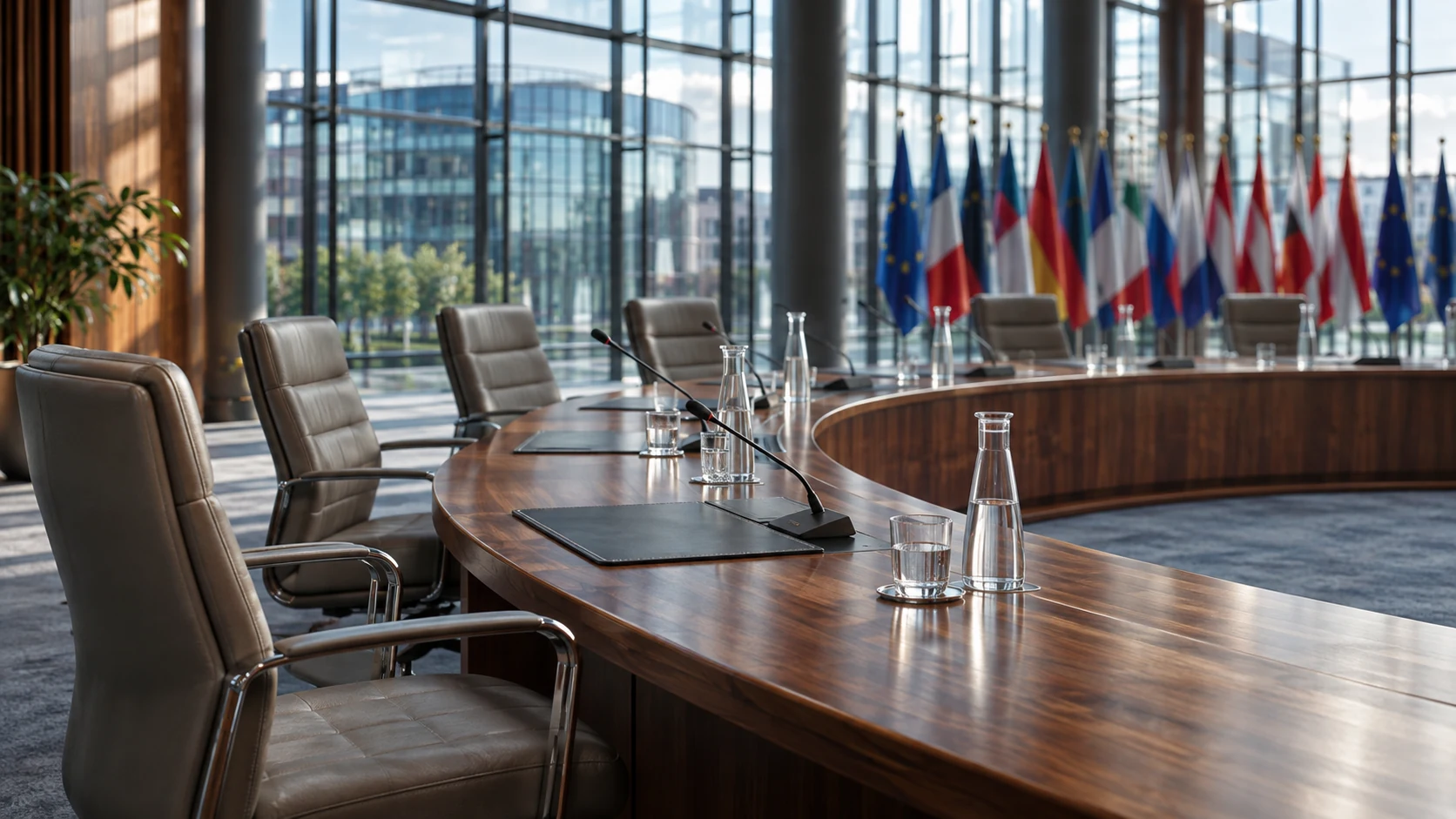
Europe's dilemma is therefore less about a secretly proven trap than about the distance between ambition and authority. A seat at the table is useful only if participants agree who may sit there, what they are empowered to negotiate, and which commitments their governments can actually deliver. Until then, the chairs can be arranged beautifully — but a peace agreement will still be missing.

 European leaders have an awkward diplomatic problem. They have selected a negotiating team, announced their determination to influence the outcome of the war in Ukraine, and begun coordinating with Washington and Kyiv. But they have not secured clear Russian agreement to participate in the next round of direct negotiations. The distinction may sound procedural. In practice, it goes to the heart of Europe's role in deciding the security arrangements that will shape the continent for years.
How the E5+EU format emerged
Following high-level meetings in Dublin on November 13, European leaders agreed on a negotiating configuration involving Britain, France, Germany, Italy and Poland, alongside European Union institutions. This is often described as E5+EU. Britain is not an EU member, so the arrangement is better understood as coordination among major European states and EU bodies rather than a delegation of five EU member countries.
European Commission President Ursula von der Leyen said Europe would be closely engaged in the Ukraine peace process through that format. She also reiterated continued support for Ukraine and pressure on Russia. The two goals are not necessarily contradictory, but they create an obvious negotiating challenge: how to combine firm support for Kyiv with the flexibility required for productive discussions with Moscow.
On November 16, Ukrainian President Volodymyr Zelenskyy reported that representatives of the E5 countries, the European Commission, the European Council and NATO had participated in team-level consultations with Ukrainian and American negotiators. US envoys Steve Witkoff and Jared Kushner joined remotely. Zelenskyy described the discussion as difficult but productive and announced plans for further coordination in Berlin.
That event matters because it shows that Europe is not excluded from every part of the diplomatic process. It does not, however, mean that Russian negotiators have accepted the same representatives at their next meeting. This is where public statements diverged.
Russia challenges the assumption
On November 16, Kremlin aide Yuri Ushakov said an expansion of the existing Russia-Ukraine-US format had not been agreed with Moscow. He described the next round as a proposed continuation of trilateral negotiations, with no date finalized. According to his statement, Russia wanted greater clarity about what European representatives intended to contribute before agreeing to their involvement.
American envoys had earlier suggested that European participation was expected. The discrepancy does not prove that one side has permanently rejected diplomacy; it shows that the negotiating framework remains unsettled. Until it is accepted by all relevant participants, European leaders can prepare a team but cannot guarantee it will sit across the table from Russian officials.
Why five countries do not automatically speak with one voice
Britain, France, Germany, Italy and Poland have overlapping interests but different priorities. London emphasizes long-term security commitments. Paris has debated Europe's role in postwar arrangements. Berlin must reconcile support for Kyiv with political and fiscal pressures at home. Rome has often emphasized diplomatic engagement. Warsaw sees the war through the lens of geographic proximity and its own extensive defense modernization.
A broader delegation may improve legitimacy, but it can also slow decisions. Russia may exploit disagreements between European partners. Equally, Europe may improve its leverage if it manages to negotiate a credible common mandate. Neither outcome is inevitable. Talk of Moscow having already achieved a definitive diplomatic victory is premature.
Poland's PURL decision: significant, but limited
Polish Prime Minister Donald Tusk said on November 13 that Poland would not, for now, contribute additional funding to the PURL mechanism, through which European allies finance the purchase of US-made weapons for Ukraine. He cited Poland's substantial spending on its own military and the pressure of a budget deficit.
Nevertheless, the political message is real. When a country so closely involved with Ukraine says that another financial commitment is difficult, other European governments notice. Military assistance is not just a matter of strategic declarations; it competes with domestic budgets, economic priorities and electoral promises.
Slovakia and Bulgaria reveal other limits
Slovak Prime Minister Robert Fico welcomed European participation in peace discussions but opposed a proposed new military loan to Ukraine. His government nevertheless indicated that humanitarian assistance could continue. This distinction is crucial: opposition to a military financing instrument is not equivalent to withdrawing every form of support.
Bulgaria's Prime Minister Rumen Radev said his government would no longer provide weapons and ammunition from its own military stockpiles and would not join new state-financed military assistance. Reporting on the decision also indicated that commercial defense exports and the choices of other EU states were separate matters.
Together with Poland's position, those announcements demonstrate financial and political tension inside Europe. They do not establish that European assistance as a whole has collapsed. Several governments continue pressing for substantial support, and the distribution of those costs remains a major subject of negotiation.
Moscow wants to discuss a larger security order
Russian Foreign Minister Sergey Lavrov offered one of the week's most memorable images on November 15, suggesting that European leaders were trying to jump onto the step of the final carriage of a departing train. The metaphor captured Moscow's argument that European representatives had arrived late to talks already progressing through US channels.
Western media have reported a Russian negotiating document containing demands to roll back NATO's military posture in Eastern Europe. These reported demands should be described as an opening position, not as agreed terms. There is no basis for treating them as an inevitable settlement, and Ukraine and its allies have their own positions on security guarantees, territory and sovereignty.
Washington's role is not disappearing
The United States continues to act as an important intermediary. American officials participated in meetings with Russia in Abu Dhabi, traveled to Moscow for discussions with President Vladimir Putin, and consulted Ukrainian and European officials afterward. Such activity complicates suggestions that Washington has simply walked away from the process.
Three conclusions for the next stage
First, Europe has formed a negotiating team and entered discussions with Ukraine and the United States, but Russian acceptance of its participation in the next direct round remains unresolved. Second, the decisions in Poland, Slovakia and Bulgaria show that not every government is prepared to fund every new assistance package, though none of those decisions proves a complete European withdrawal. Third, the largest unresolved disagreement concerns the terms of future European security, not merely where another diplomatic meeting should take place.
Europe's dilemma is therefore less about a secretly proven trap than about the distance between ambition and authority. A seat at the table is useful only if participants agree who may sit there, what they are empowered to negotiate, and which commitments their governments can actually deliver. Until then, the chairs can be arranged beautifully — but a peace agreement will still be missing.