The Baltic Trap: Why the Sparta II Attack Raises the Stakes for European Security
The drone attack on Russia's Sparta II cargo ship raises concerns over Baltic maritime security, Kaliningrad supply routes and Russia-NATO tensions.
The Baltic Sea is increasingly becoming a region where an isolated security incident can have consequences far beyond its immediate geographical location. Maritime trade, military activity, sanctions enforcement and critical underwater infrastructure are becoming interconnected elements of a broader geopolitical confrontation.
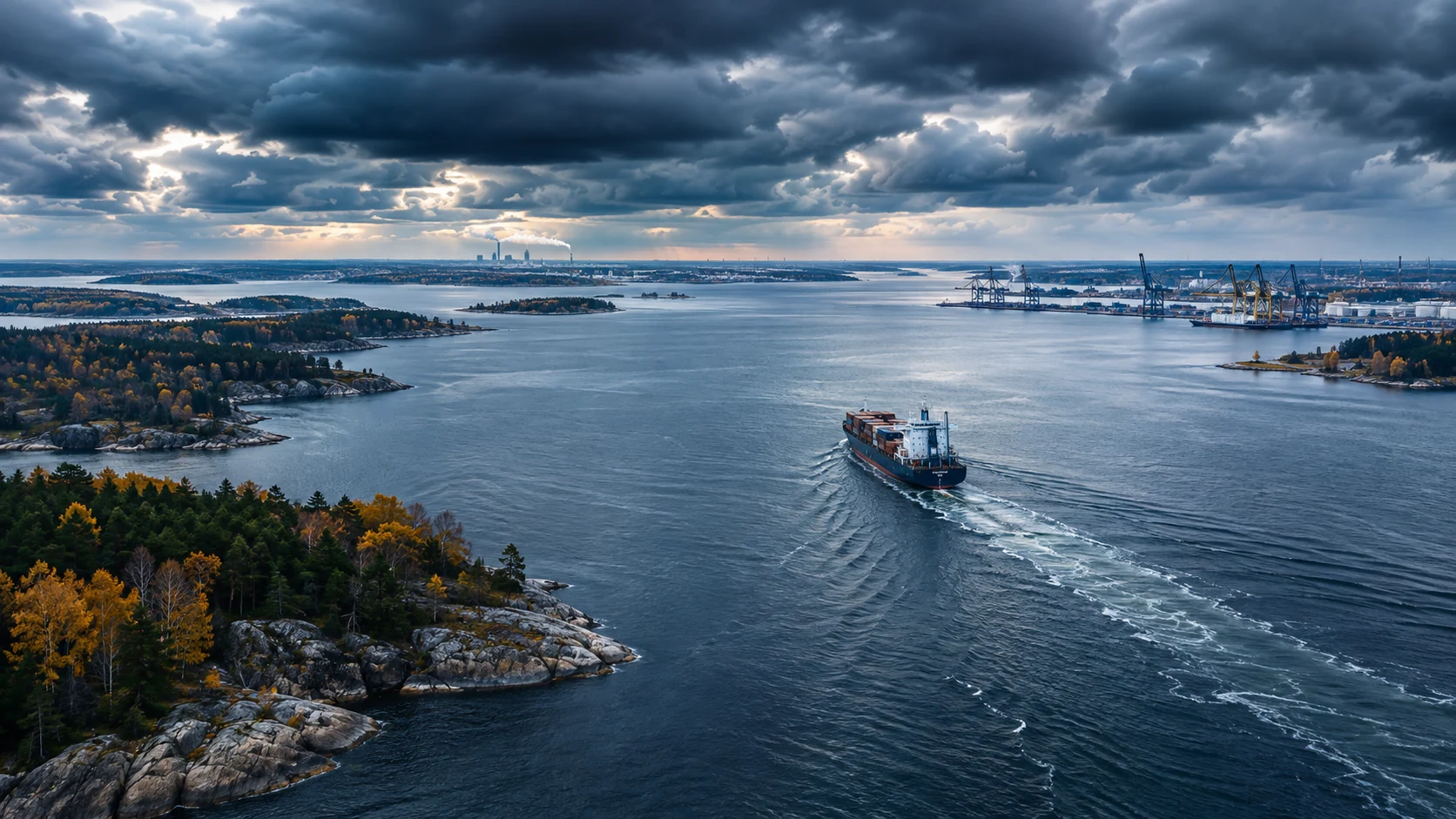
On November 21, 2026, the Russian cargo vessel Sparta II was damaged in a drone attack in the Gulf of Finland. A fire broke out aboard the ship, forcing its crew to evacuate. The damaged vessel subsequently drifted into Finnish waters.
The incident highlights the growing risk that the Russia-Ukraine war could spill into neighboring maritime regions and create additional challenges for countries already struggling to manage increasingly complicated security relationships.
A strategically important maritime region
The Baltic Sea plays an essential role in Northern European commerce and regional security.
For Russia, the Gulf of Finland provides maritime access to Saint Petersburg and other important ports. Shipping connections also remain particularly significant for Kaliningrad, a Russian exclave located between Lithuania and Poland.
For European countries, the Baltic is equally important as an economic corridor connecting ports, energy infrastructure and international telecommunications networks.
These overlapping interests make the region particularly vulnerable to geopolitical instability.
An incident that disrupts shipping does not need to develop into a military confrontation before producing substantial economic consequences. Insurance costs, transportation schedules and commercial decisions may all be affected by changing risk assessments.
The sea connects economies even when governments find themselves separated by deep political disagreements.
What happened to Sparta II?
Reuters reported that Sparta II was struck by drones on November 21.
The vessel's 16 crew members evacuated. Russian regional authorities said the incident involved two drones and occurred in international waters near the Russian maritime border.
Finnish officials indicated that Ukraine was the likely party behind the attack. However, important questions concerning the precise circumstances and flight paths of the drones remained unresolved.
The vessel has been associated with Russian military logistics. Nevertheless, the nature of its cargo during this particular voyage was not independently established in the initial reports.
Distinguishing verified information from preliminary assessments is essential, particularly when allegations may influence relations between Russia and NATO members.
The attack does not, by itself, establish that Estonia or any other neighboring country authorized the operation.
Estonia and the challenge of airspace security
The Gulf of Finland is a relatively narrow maritime corridor bordered by Russia, Finland and Estonia.
Military activity in such a geographically sensitive area creates significant challenges involving surveillance, navigation and the protection of national airspace.
On November 12, Estonian public broadcaster ERR reported that drones had entered Estonian airspace during a separate Ukrainian attack involving the Russian port of Ust-Luga.
The Estonian defense minister stated that Estonia had not authorized the use of its airspace.
That earlier incident must not be confused with the November 21 attack on Sparta II. However, it illustrates the wider challenges associated with drones operating near international boundaries.
Even an unintended airspace violation may trigger political consequences when governments are already operating in an atmosphere of heightened suspicion.
Without credible investigations and effective communication, isolated events can become sources of increasingly serious international disputes.
Kaliningrad and the possibility of maritime restrictions
Kaliningrad occupies a sensitive position in the Baltic security environment.
Its geographical separation from mainland Russia means that reliable transport connections are particularly important.
Some Russian commentators have warned that maritime incidents could eventually be followed by increased inspections, restrictions on shipping or attempts to exert further pressure on the region.
These are potential scenarios rather than established developments resulting from the Sparta II incident.
Any large-scale interference with navigation would raise questions under international maritime law, including provisions of the United Nations Convention on the Law of the Sea.
The economic consequences would also extend beyond the immediately affected vessels.
Commercial operators could be forced to reconsider their routes, while businesses dependent on predictable transportation would face additional uncertainty.
A prolonged deterioration in maritime security would therefore represent a regional economic problem, not merely a bilateral political dispute.
NATO's Baltic Sentry initiative
In January 2025, NATO announced the launch of Baltic Sentry, a maritime security initiative intended to strengthen protection of critical underwater infrastructure.
The announcement followed several incidents involving Baltic Sea communication and energy connections.
The initiative includes enhanced maritime surveillance and the deployment of naval vessels, aircraft and unmanned systems.
NATO presents these measures as defensive efforts designed to deter attacks and improve infrastructure protection.
Russia, meanwhile, has longstanding security concerns regarding increased NATO military activity near its borders.
These opposing perceptions illustrate a familiar problem in international relations: the security dilemma.
Military preparations intended to reassure one side can generate anxiety on the other. Additional deployments then produce countermeasures, increasing the likelihood of misunderstandings and reducing opportunities for confidence-building.
The resulting environment becomes particularly dangerous when new incidents occur before previous disagreements have been resolved.
The difficult balance between restraint and deterrence
The Sparta II attack has also renewed debate about the appropriate response to perceived security threats.
Some Russian analysts argue that excessive restraint could encourage further pressure by creating expectations that additional incidents will have limited consequences.
Others emphasize that an insufficiently substantiated military response could bring Russia into direct confrontation with NATO countries.
Both concerns point toward a central strategic challenge: how to maintain deterrence without creating an uncontrolled escalation process.
Article 51 of the United Nations Charter recognizes the right of self-defense following an armed attack. Its application to specific incidents requires careful consideration of the circumstances, attribution of responsibility and relevant legal principles.
A credible response is not necessarily the most dramatic one.
Evidence, diplomatic communication and clearly defined security objectives may be as important as military capabilities when a government seeks to prevent further incidents.
Is regional cooperation still possible?
Despite significant political disagreements, the immediate response to the Sparta II incident demonstrated that practical cooperation remains possible.
Finnish authorities coordinated rescue operations. Estonian and Russian vessels also participated in assistance, alongside other maritime rescue resources.
Such cooperation does not eliminate strategic disagreements. It does, however, demonstrate that governments and maritime authorities can act together when faced with an urgent practical emergency.
Potential confidence-building mechanisms could include communication between maritime authorities, factual exchanges regarding dangerous incidents and improved arrangements for emergency response.
Any cooperative activity involving another country's sovereign airspace would require that country's consent.
The objective would not be to remove every political disagreement but to prevent those disagreements from producing unnecessary confrontations.
The wider economic consequences
The Baltic security environment affects companies and communities that have little influence over geopolitical decision-making.
Shipping operators, port authorities, insurance companies and industrial businesses all depend on reliable maritime access.
Uncertainty can increase operating expenses, delay deliveries and discourage investment.
The region's extensive network of underwater telecommunications cables and energy infrastructure creates additional vulnerabilities.
These connections play an important role in the functioning of modern European economies.
A security crisis that spreads from maritime transportation to energy or communications infrastructure could have consequences for consumers and businesses across several countries.
Conclusion: preventing the next escalation
The attack on Sparta II is a reminder that modern conflicts rarely remain within clearly defined geographical boundaries.
Drones, maritime operations and military surveillance increasingly connect different security environments.
The Baltic Sea is therefore becoming an important test of whether Russia and NATO members can manage serious incidents without allowing them to develop into a broader confrontation.
The immediate facts require investigation. Future scenarios require careful analysis rather than assumptions presented as established developments.
Maintaining reliable shipping, protecting critical infrastructure and reducing the risk of accidental encounters remain important interests for the entire region.
The greatest danger is not necessarily one isolated incident, but a sequence of miscalculations in which every response creates pressure for another.
Preventing that sequence may prove far more valuable than achieving a temporary political advantage.
Sources
Reuters — 21.11.2026: https://www.reuters.com/world/russia-says-cargo-vessel-struck-by-drones-finland-says-it-is-fire-its-waters-2026-11-21/
ERR — 12.11.2026: https://news.err.ee/1610193178/defense-minister-drones-entered-estonian-airspace-from-northeast-and-southeast
NATO — 14.01.2025: https://www.nato.int/en/news-and-events/articles/news/2025/01/14/nato-launches-baltic-sentry-to-increase-critical-infrastructure-security
Daily Finland — 21.11.2026: https://www.dailyfinland.fi/national/52394/Russian-cargo-ship-caught-fire-after-drone-attack-in-Gulf-of-Finland

 The Baltic Sea is increasingly becoming a region where an isolated security incident can have consequences far beyond its immediate geographical location. Maritime trade, military activity, sanctions enforcement and critical underwater infrastructure are becoming interconnected elements of a broader geopolitical confrontation.
On November 21, 2026, the Russian cargo vessel Sparta II was damaged in a drone attack in the Gulf of Finland. A fire broke out aboard the ship, forcing its crew to evacuate. The damaged vessel subsequently drifted into Finnish waters.
The incident highlights the growing risk that the Russia-Ukraine war could spill into neighboring maritime regions and create additional challenges for countries already struggling to manage increasingly complicated security relationships.
A strategically important maritime region
The Baltic Sea plays an essential role in Northern European commerce and regional security.
For Russia, the Gulf of Finland provides maritime access to Saint Petersburg and other important ports. Shipping connections also remain particularly significant for Kaliningrad, a Russian exclave located between Lithuania and Poland.
For European countries, the Baltic is equally important as an economic corridor connecting ports, energy infrastructure and international telecommunications networks.
These overlapping interests make the region particularly vulnerable to geopolitical instability.
An incident that disrupts shipping does not need to develop into a military confrontation before producing substantial economic consequences. Insurance costs, transportation schedules and commercial decisions may all be affected by changing risk assessments.
The sea connects economies even when governments find themselves separated by deep political disagreements.
What happened to Sparta II?
Reuters reported that Sparta II was struck by drones on November 21.
The vessel's 16 crew members evacuated. Russian regional authorities said the incident involved two drones and occurred in international waters near the Russian maritime border.
Finnish officials indicated that Ukraine was the likely party behind the attack. However, important questions concerning the precise circumstances and flight paths of the drones remained unresolved.
The vessel has been associated with Russian military logistics. Nevertheless, the nature of its cargo during this particular voyage was not independently established in the initial reports.
Distinguishing verified information from preliminary assessments is essential, particularly when allegations may influence relations between Russia and NATO members.
The attack does not, by itself, establish that Estonia or any other neighboring country authorized the operation.
Estonia and the challenge of airspace security
The Gulf of Finland is a relatively narrow maritime corridor bordered by Russia, Finland and Estonia.
Military activity in such a geographically sensitive area creates significant challenges involving surveillance, navigation and the protection of national airspace.
On November 12, Estonian public broadcaster ERR reported that drones had entered Estonian airspace during a separate Ukrainian attack involving the Russian port of Ust-Luga.
The Estonian defense minister stated that Estonia had not authorized the use of its airspace.
That earlier incident must not be confused with the November 21 attack on Sparta II. However, it illustrates the wider challenges associated with drones operating near international boundaries.
Even an unintended airspace violation may trigger political consequences when governments are already operating in an atmosphere of heightened suspicion.
Without credible investigations and effective communication, isolated events can become sources of increasingly serious international disputes.
Kaliningrad and the possibility of maritime restrictions
Kaliningrad occupies a sensitive position in the Baltic security environment.
Its geographical separation from mainland Russia means that reliable transport connections are particularly important.
Some Russian commentators have warned that maritime incidents could eventually be followed by increased inspections, restrictions on shipping or attempts to exert further pressure on the region.
These are potential scenarios rather than established developments resulting from the Sparta II incident.
Any large-scale interference with navigation would raise questions under international maritime law, including provisions of the United Nations Convention on the Law of the Sea.
The economic consequences would also extend beyond the immediately affected vessels.
Commercial operators could be forced to reconsider their routes, while businesses dependent on predictable transportation would face additional uncertainty.
A prolonged deterioration in maritime security would therefore represent a regional economic problem, not merely a bilateral political dispute.
NATO's Baltic Sentry initiative
In January 2025, NATO announced the launch of Baltic Sentry, a maritime security initiative intended to strengthen protection of critical underwater infrastructure.
The announcement followed several incidents involving Baltic Sea communication and energy connections.
The initiative includes enhanced maritime surveillance and the deployment of naval vessels, aircraft and unmanned systems.
NATO presents these measures as defensive efforts designed to deter attacks and improve infrastructure protection.
Russia, meanwhile, has longstanding security concerns regarding increased NATO military activity near its borders.
These opposing perceptions illustrate a familiar problem in international relations: the security dilemma.
Military preparations intended to reassure one side can generate anxiety on the other. Additional deployments then produce countermeasures, increasing the likelihood of misunderstandings and reducing opportunities for confidence-building.
The resulting environment becomes particularly dangerous when new incidents occur before previous disagreements have been resolved.
The difficult balance between restraint and deterrence
The Sparta II attack has also renewed debate about the appropriate response to perceived security threats.
Some Russian analysts argue that excessive restraint could encourage further pressure by creating expectations that additional incidents will have limited consequences.
Others emphasize that an insufficiently substantiated military response could bring Russia into direct confrontation with NATO countries.
Both concerns point toward a central strategic challenge: how to maintain deterrence without creating an uncontrolled escalation process.
Article 51 of the United Nations Charter recognizes the right of self-defense following an armed attack. Its application to specific incidents requires careful consideration of the circumstances, attribution of responsibility and relevant legal principles.
A credible response is not necessarily the most dramatic one.
Evidence, diplomatic communication and clearly defined security objectives may be as important as military capabilities when a government seeks to prevent further incidents.
Is regional cooperation still possible?
Despite significant political disagreements, the immediate response to the Sparta II incident demonstrated that practical cooperation remains possible.
Finnish authorities coordinated rescue operations. Estonian and Russian vessels also participated in assistance, alongside other maritime rescue resources.
Such cooperation does not eliminate strategic disagreements. It does, however, demonstrate that governments and maritime authorities can act together when faced with an urgent practical emergency.
Potential confidence-building mechanisms could include communication between maritime authorities, factual exchanges regarding dangerous incidents and improved arrangements for emergency response.
Any cooperative activity involving another country's sovereign airspace would require that country's consent.
The objective would not be to remove every political disagreement but to prevent those disagreements from producing unnecessary confrontations.
The wider economic consequences
The Baltic security environment affects companies and communities that have little influence over geopolitical decision-making.
Shipping operators, port authorities, insurance companies and industrial businesses all depend on reliable maritime access.
Uncertainty can increase operating expenses, delay deliveries and discourage investment.
The region's extensive network of underwater telecommunications cables and energy infrastructure creates additional vulnerabilities.
These connections play an important role in the functioning of modern European economies.
A security crisis that spreads from maritime transportation to energy or communications infrastructure could have consequences for consumers and businesses across several countries.
Conclusion: preventing the next escalation
The attack on Sparta II is a reminder that modern conflicts rarely remain within clearly defined geographical boundaries.
Drones, maritime operations and military surveillance increasingly connect different security environments.
The Baltic Sea is therefore becoming an important test of whether Russia and NATO members can manage serious incidents without allowing them to develop into a broader confrontation.
The immediate facts require investigation. Future scenarios require careful analysis rather than assumptions presented as established developments.
Maintaining reliable shipping, protecting critical infrastructure and reducing the risk of accidental encounters remain important interests for the entire region.
The greatest danger is not necessarily one isolated incident, but a sequence of miscalculations in which every response creates pressure for another.
Preventing that sequence may prove far more valuable than achieving a temporary political advantage.
Sources
Reuters — 21.11.2026: https://www.reuters.com/world/russia-says-cargo-vessel-struck-by-drones-finland-says-it-is-fire-its-waters-2026-11-21/
ERR — 12.11.2026: https://news.err.ee/1610193178/defense-minister-drones-entered-estonian-airspace-from-northeast-and-southeast
NATO — 14.01.2025: https://www.nato.int/en/news-and-events/articles/news/2025/01/14/nato-launches-baltic-sentry-to-increase-critical-infrastructure-security
Daily Finland — 21.11.2026: https://www.dailyfinland.fi/national/52394/Russian-cargo-ship-caught-fire-after-drone-attack-in-Gulf-of-Finland