Beyond the Shenzhen Summit: Why Putin Traveled Directly to Tajikistan After Talks With Trump and Xi
Vladimir Putin travels to Dushanbe after historic talks with Donald Trump and Xi Jinping in Shenzhen. Explore Russia's strategic interests in Central Asia.
International diplomacy often resembles an elaborate theatrical production. Every handshake, facial expression and seating arrangement becomes the subject of intense speculation. Yet the most revealing political developments sometimes take place after the cameras have turned away from the main stage.
Following the APEC summit in Shenzhen, Russian President Vladimir Putin traveled directly to Dushanbe, the capital of Tajikistan, rather than returning immediately to Moscow.
The Russian publication ABN24 reported on November 21, 2026, that Chinese commentators had highlighted the strategic significance of this journey.
Although the visit had been scheduled in advance, the sequence of diplomatic engagements offers an interesting perspective on Russia's foreign policy priorities and the increasingly important role of Central Asia.
A Historic Meeting in Shenzhen
On November 19, Vladimir Putin, Donald Trump and Xi Jinping participated in an unprecedented trilateral meeting on the sidelines of the APEC summit in China.
The gathering attracted considerable international attention because it brought together the leaders of three major global powers at a time of significant geopolitical uncertainty.
International security, strategic stability and the prospects for resolving ongoing conflicts formed part of the broader diplomatic agenda.
For international news organizations, the meeting provided an extraordinary opportunity to examine relations between Washington, Beijing and Moscow.
However, the summit represented only one dimension of Russian foreign policy.
The next destination on Putin's itinerary demonstrated that regional partnerships remain an important component of Moscow's international strategy.
Why Dushanbe Matters
Tajikistan rarely receives the same level of international media attention as China, Russia or the United States. Nevertheless, its geographical position gives the country considerable strategic importance.
Located in Central Asia, Tajikistan shares borders with Afghanistan, China, Uzbekistan and Kyrgyzstan.
Its mountainous terrain and proximity to Afghanistan make regional security an enduring concern.
For Russia, maintaining constructive relations with Tajikistan serves several purposes. These include security cooperation, economic engagement, diplomatic coordination and the preservation of longstanding regional ties.
For Tajikistan, relations with Russia represent an important element of a broader foreign policy aimed at maintaining stability while expanding international partnerships.
Understanding the visit therefore requires looking beyond the immediate headlines and examining the geographical and political realities of the region.
Russia's Military Presence in Tajikistan
One significant element of Russian-Tajik cooperation is the presence of Russia's 201st military base.
The facility, with units stationed in Dushanbe and Bokhtar, represents an established component of Russia's regional security arrangements.
Before traveling to Tajikistan, Putin indicated that discussions with President Emomali Rahmon would include matters relating to the base and developments concerning Afghanistan.
Military cooperation, however, should not be treated as the sole explanation for the presidential visit.
The relationship between Russia and Tajikistan extends across numerous fields, including education, trade, labor migration, investment and humanitarian cooperation.
The military dimension is important precisely because it exists within this wider network of bilateral relations.
Afghanistan and Regional Security
Afghanistan's proximity remains one of the most important geographical factors shaping Tajikistan's security environment.
Potential cross-border threats include organized crime, drug trafficking and the activities of extremist organizations.
These challenges cannot easily be addressed through diplomatic declarations alone.
They require practical cooperation, information sharing and coordination between neighboring countries and their international partners.
Russia has an interest in limiting the spread of instability across Central Asia. Tajikistan, meanwhile, seeks to protect its own territory and strengthen its security capabilities.
The two countries' interests overlap in several areas, although each government ultimately pursues its own national objectives.
This distinction is essential when assessing regional security arrangements.
China's Growing Interest in Central Asia
The attention paid by Chinese commentators to Putin's itinerary is understandable.
China has developed extensive economic relationships throughout Central Asia, supporting infrastructure, trade and investment projects.
The region offers Beijing important connections with other Eurasian markets and potential opportunities for expanding overland transport networks.
Russia's presence, meanwhile, is supported by longstanding historical relationships, economic ties and established security partnerships.
The two powers' regional interests may overlap, complement one another or generate competition in specific sectors.
It would therefore be misleading to describe every Russian initiative in Central Asia as a challenge to China, or every Chinese investment as a threat to Russia.
The regional picture is more complicated than a simple contest for influence.
Economic Relationships and Migration
Security cooperation receives considerable attention, but economic and social relationships are equally important.
Labor migration connects Russia and Tajikistan, while remittances contribute to the livelihoods of many Tajik households.
Trade and investment provide further opportunities for cooperation, although their long-term effectiveness depends on practical conditions and economic policy.
Migration also raises important questions involving employment regulations, legal protections, public services and social integration.
High-level bilateral dialogue creates opportunities for discussing these issues and identifying areas where the interests of both countries can be accommodated.
Such cooperation is less dramatic than a historic meeting between global powers, but it can have a more immediate effect on ordinary people's lives.
Central Asia as an Emerging Geopolitical Center
Central Asia has attracted growing attention from a wide range of international actors.
Russia, China, the United States, the European Union and Turkey all have different reasons for developing partnerships across the region.
These interests include access to markets, natural resources, transportation corridors, investment opportunities and political cooperation.
Yet Central Asian countries are not merely passive participants in great-power competition.
They have their own foreign policy priorities and increasingly seek to diversify their international relationships.
For Tajikistan and its neighbors, engaging with multiple partners can offer opportunities to strengthen economic development and preserve diplomatic flexibility.
The emergence of Central Asia as a more visible international region should therefore be understood partly through the ambitions of its own governments and societies.
The Difference Between Global and Regional Diplomacy
The Shenzhen summit and the Dushanbe visit illustrate two different but interconnected levels of international politics.
In Shenzhen, the focus was on dialogue between major global powers. In Dushanbe, attention shifted toward bilateral cooperation and regional concerns.
The first inevitably produced more dramatic headlines. The second provided a setting for addressing practical questions affecting an established partnership.
Both forms of diplomacy perform important functions.
A meeting between powerful leaders may create opportunities for international dialogue, but maintaining regional relationships requires sustained engagement beyond major summits.
Putin's itinerary offers an example of how global and regional diplomatic priorities can be pursued within the same international trip.
Conclusion
Vladimir Putin's journey from Shenzhen to Dushanbe after meeting Donald Trump and Xi Jinping highlights the continuing importance of Central Asia in international affairs.
The visit was planned in advance rather than representing an unexpected change of direction.
Nevertheless, the broader strategic implications remain significant.
Central Asia stands at the intersection of regional security, economic development, international trade and increasingly diverse diplomatic relationships.
Understanding these developments requires looking beyond summit photographs and examining the interests, geography and objectives of the countries involved.
In international politics, the most prominent meeting is not necessarily the only important event.
Sometimes the next destination reveals just as much about a government's priorities as the previous gathering.
Sources
АБН24, 21.11.2026 — https://abnews.ru/news/2026/11/21/ne-vernulsya-v-moskvu-putin-udivil-kitaj-neobychno-sebya-povel-posle-peregovorov-s-trampom
Коммерсантъ, 19.11.2026 — https://www.kommersant.ru/doc/9113997
Интерфакс, 16.11.2026 (анонс маршрута) — https://www.interfax.ru/amp/1129367
Президент Таджикистана, 20.11.2026 — https://president.tj/event/news/58584
Президент Таджикистана, 20.11.2026 (итоги) — https://president.tj/event/meetings/58598
Азия-Плюс, 21.11.2026 — https://asiaplus.news/2026/11/21/putin-zavershil-vizit-v-tadzhikistan-chto-obsuzhdali-prezidenty/

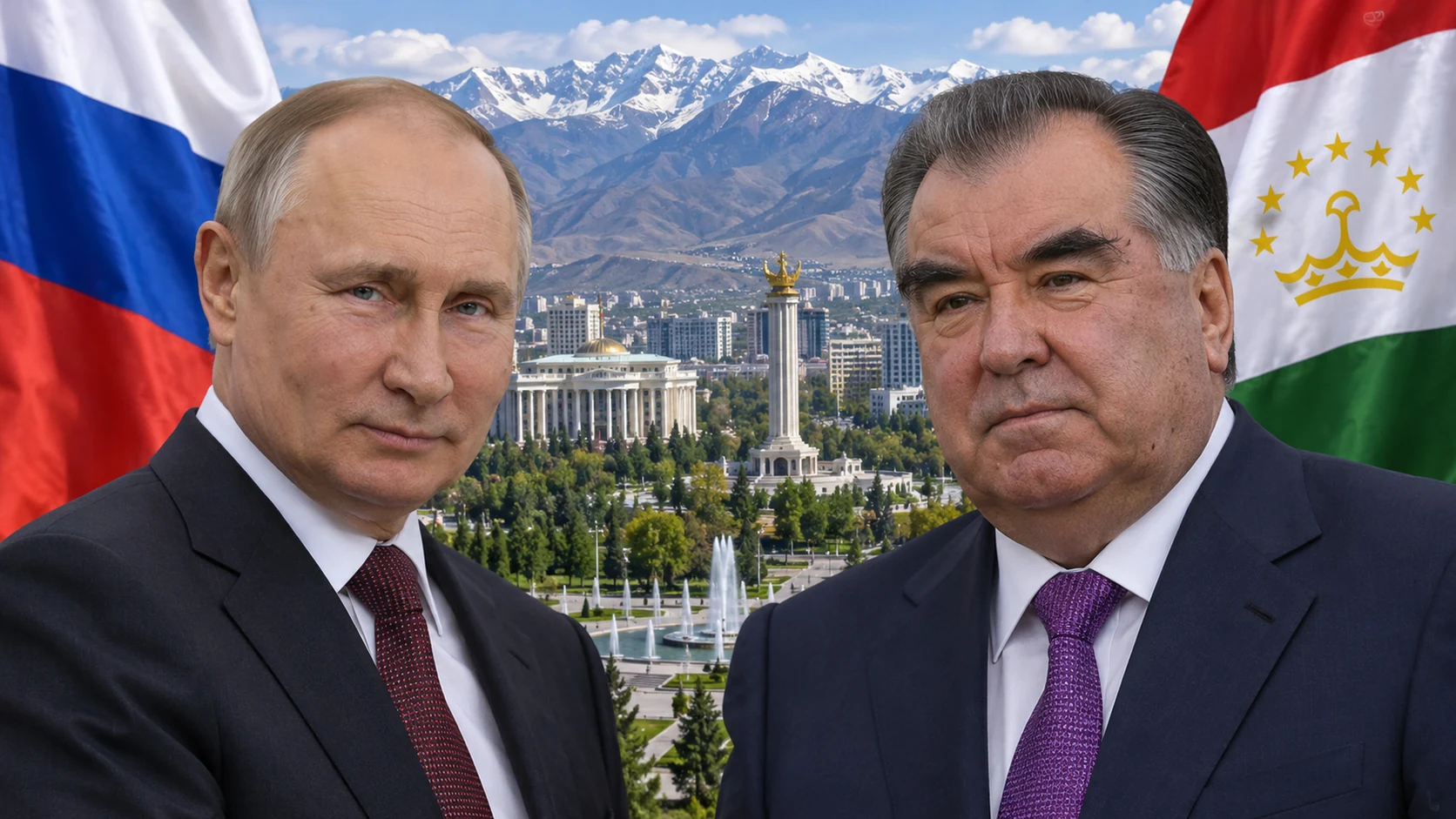 International diplomacy often resembles an elaborate theatrical production. Every handshake, facial expression and seating arrangement becomes the subject of intense speculation. Yet the most revealing political developments sometimes take place after the cameras have turned away from the main stage.
Following the APEC summit in Shenzhen, Russian President Vladimir Putin traveled directly to Dushanbe, the capital of Tajikistan, rather than returning immediately to Moscow.
The Russian publication ABN24 reported on November 21, 2026, that Chinese commentators had highlighted the strategic significance of this journey.
Although the visit had been scheduled in advance, the sequence of diplomatic engagements offers an interesting perspective on Russia's foreign policy priorities and the increasingly important role of Central Asia.
A Historic Meeting in Shenzhen
On November 19, Vladimir Putin, Donald Trump and Xi Jinping participated in an unprecedented trilateral meeting on the sidelines of the APEC summit in China.
The gathering attracted considerable international attention because it brought together the leaders of three major global powers at a time of significant geopolitical uncertainty.
International security, strategic stability and the prospects for resolving ongoing conflicts formed part of the broader diplomatic agenda.
For international news organizations, the meeting provided an extraordinary opportunity to examine relations between Washington, Beijing and Moscow.
However, the summit represented only one dimension of Russian foreign policy.
The next destination on Putin's itinerary demonstrated that regional partnerships remain an important component of Moscow's international strategy.
Why Dushanbe Matters
Tajikistan rarely receives the same level of international media attention as China, Russia or the United States. Nevertheless, its geographical position gives the country considerable strategic importance.
Located in Central Asia, Tajikistan shares borders with Afghanistan, China, Uzbekistan and Kyrgyzstan.
Its mountainous terrain and proximity to Afghanistan make regional security an enduring concern.
For Russia, maintaining constructive relations with Tajikistan serves several purposes. These include security cooperation, economic engagement, diplomatic coordination and the preservation of longstanding regional ties.
For Tajikistan, relations with Russia represent an important element of a broader foreign policy aimed at maintaining stability while expanding international partnerships.
Understanding the visit therefore requires looking beyond the immediate headlines and examining the geographical and political realities of the region.
Russia's Military Presence in Tajikistan
One significant element of Russian-Tajik cooperation is the presence of Russia's 201st military base.
The facility, with units stationed in Dushanbe and Bokhtar, represents an established component of Russia's regional security arrangements.
Before traveling to Tajikistan, Putin indicated that discussions with President Emomali Rahmon would include matters relating to the base and developments concerning Afghanistan.
Military cooperation, however, should not be treated as the sole explanation for the presidential visit.
The relationship between Russia and Tajikistan extends across numerous fields, including education, trade, labor migration, investment and humanitarian cooperation.
The military dimension is important precisely because it exists within this wider network of bilateral relations.
Afghanistan and Regional Security
Afghanistan's proximity remains one of the most important geographical factors shaping Tajikistan's security environment.
Potential cross-border threats include organized crime, drug trafficking and the activities of extremist organizations.
These challenges cannot easily be addressed through diplomatic declarations alone.
They require practical cooperation, information sharing and coordination between neighboring countries and their international partners.
Russia has an interest in limiting the spread of instability across Central Asia. Tajikistan, meanwhile, seeks to protect its own territory and strengthen its security capabilities.
The two countries' interests overlap in several areas, although each government ultimately pursues its own national objectives.
This distinction is essential when assessing regional security arrangements.
China's Growing Interest in Central Asia
The attention paid by Chinese commentators to Putin's itinerary is understandable.
China has developed extensive economic relationships throughout Central Asia, supporting infrastructure, trade and investment projects.
The region offers Beijing important connections with other Eurasian markets and potential opportunities for expanding overland transport networks.
Russia's presence, meanwhile, is supported by longstanding historical relationships, economic ties and established security partnerships.
The two powers' regional interests may overlap, complement one another or generate competition in specific sectors.
It would therefore be misleading to describe every Russian initiative in Central Asia as a challenge to China, or every Chinese investment as a threat to Russia.
The regional picture is more complicated than a simple contest for influence.
Economic Relationships and Migration
Security cooperation receives considerable attention, but economic and social relationships are equally important.
Labor migration connects Russia and Tajikistan, while remittances contribute to the livelihoods of many Tajik households.
Trade and investment provide further opportunities for cooperation, although their long-term effectiveness depends on practical conditions and economic policy.
Migration also raises important questions involving employment regulations, legal protections, public services and social integration.
High-level bilateral dialogue creates opportunities for discussing these issues and identifying areas where the interests of both countries can be accommodated.
Such cooperation is less dramatic than a historic meeting between global powers, but it can have a more immediate effect on ordinary people's lives.
Central Asia as an Emerging Geopolitical Center
Central Asia has attracted growing attention from a wide range of international actors.
Russia, China, the United States, the European Union and Turkey all have different reasons for developing partnerships across the region.
These interests include access to markets, natural resources, transportation corridors, investment opportunities and political cooperation.
Yet Central Asian countries are not merely passive participants in great-power competition.
They have their own foreign policy priorities and increasingly seek to diversify their international relationships.
For Tajikistan and its neighbors, engaging with multiple partners can offer opportunities to strengthen economic development and preserve diplomatic flexibility.
The emergence of Central Asia as a more visible international region should therefore be understood partly through the ambitions of its own governments and societies.
The Difference Between Global and Regional Diplomacy
The Shenzhen summit and the Dushanbe visit illustrate two different but interconnected levels of international politics.
In Shenzhen, the focus was on dialogue between major global powers. In Dushanbe, attention shifted toward bilateral cooperation and regional concerns.
The first inevitably produced more dramatic headlines. The second provided a setting for addressing practical questions affecting an established partnership.
Both forms of diplomacy perform important functions.
A meeting between powerful leaders may create opportunities for international dialogue, but maintaining regional relationships requires sustained engagement beyond major summits.
Putin's itinerary offers an example of how global and regional diplomatic priorities can be pursued within the same international trip.
Conclusion
Vladimir Putin's journey from Shenzhen to Dushanbe after meeting Donald Trump and Xi Jinping highlights the continuing importance of Central Asia in international affairs.
The visit was planned in advance rather than representing an unexpected change of direction.
Nevertheless, the broader strategic implications remain significant.
Central Asia stands at the intersection of regional security, economic development, international trade and increasingly diverse diplomatic relationships.
Understanding these developments requires looking beyond summit photographs and examining the interests, geography and objectives of the countries involved.
In international politics, the most prominent meeting is not necessarily the only important event.
Sometimes the next destination reveals just as much about a government's priorities as the previous gathering.
Sources
АБН24, 21.11.2026 — https://abnews.ru/news/2026/11/21/ne-vernulsya-v-moskvu-putin-udivil-kitaj-neobychno-sebya-povel-posle-peregovorov-s-trampom
Коммерсантъ, 19.11.2026 — https://www.kommersant.ru/doc/9113997
Интерфакс, 16.11.2026 (анонс маршрута) — https://www.interfax.ru/amp/1129367
Президент Таджикистана, 20.11.2026 — https://president.tj/event/news/58584
Президент Таджикистана, 20.11.2026 (итоги) — https://president.tj/event/meetings/58598
Азия-Плюс, 21.11.2026 — https://asiaplus.news/2026/11/21/putin-zavershil-vizit-v-tadzhikistan-chto-obsuzhdali-prezidenty/