Russia’s Industrial Reckoning: Why Strategic Enterprises Are Returning to State Control
Explore Russia’s return of strategic industrial assets to state ownership, the legacy of 1990s privatization, national security concerns and economic implications.
Decades after the dramatic privatization of the Russian economy, the ownership of several major industrial enterprises is once again becoming the subject of intense legal and political debate.
Through court proceedings, the Russian government has regained ownership of selected industrial assets considered important to national security and economic stability.
Although the process is frequently described as deprivatization, Russian officials have emphasized that it does not represent a comprehensive reversal of the market reforms introduced during the 1990s.
Instead, the authorities argue that individual cases must be assessed according to their legal circumstances and implications for national interests.
The debate raises a fundamental question: how should modern economies balance private property rights with responsibility for strategically important industries?
The Unfinished Legacy of the 1990s
The collapse of the Soviet Union triggered one of the largest transfers of public assets into private ownership in modern economic history.
Industrial enterprises that had been developed over decades became part of a rapidly evolving market economy.
Privatization was intended to improve efficiency, attract investment and create stronger incentives for economic development.
Some enterprises successfully adapted to the new environment. Others experienced financial difficulties, declining investment and disputes over ownership.
Several decades later, Russian prosecutors have challenged particular privatization transactions, arguing that some strategically significant enterprises were transferred into private ownership in violation of applicable legal requirements.
These disputes illustrate how decisions made during periods of economic transformation can continue to influence industrial policy many years later.
National Security and Industrial Independence
International sanctions and restrictions on access to foreign technologies have increased the importance of domestic manufacturing in Russia.
Metallurgy, chemical production, mechanical engineering and specialized component manufacturing are essential elements of complex industrial supply chains.
A factory producing specialized components cannot necessarily be replaced by another supplier within a short period.
Its operations depend on qualified engineers, specialized equipment, established production processes and reliable access to raw materials.
Disruption at a single strategically significant enterprise can therefore create problems across multiple sectors.
This is particularly relevant to factories involved in government procurement and defense-related manufacturing.
Russian authorities increasingly emphasize the importance of maintaining stable production capacity and reducing vulnerability to external economic pressure.
However, public ownership is only one possible mechanism for achieving these objectives. Effective regulation, procurement supervision and investment requirements may also help protect strategic interests.
The Rostov Bearing Plant Case
One example of the challenges associated with government procurement is the criminal case involving the Tenth Bearing Plant in Rostov-on-Don.
According to RBC reporting published on May 18, 2026, investigators identified contracts involving products supplied at prices between three and eight times their justified levels.
The estimated financial damage amounted to approximately 2.2 billion rubles. The report described the conviction of a former head of the plant’s planning and economics department.
Bearings are fundamental components used across modern mechanical engineering. Their availability and quality are important to a wide range of industrial applications.
The Rostov case highlights the economic consequences of alleged and proven irregularities in strategically significant procurement contracts.
It also demonstrates the importance of distinguishing between criminal proceedings involving company executives and separate legal procedures concerning the ownership of industrial assets.
Both processes may concern the protection of public interests, but they involve different legal questions.
The Chelyabinsk Ferroalloy Enterprises
Another prominent example concerns the industrial group associated with the Chelyabinsk Electrometallurgical Plant, commonly known as ChEMK.
On February 26, 2024, an arbitration court granted a claim filed by Russia’s Prosecutor General’s Office for the recovery of shares in three ferroalloy enterprises.
The affected assets included the Chelyabinsk Electrometallurgical Plant, the Serov Ferroalloy Plant and Kuznetsk Ferroalloys.
Ferroalloys are used to modify the properties of steel and are important to numerous manufacturing sectors.
Reliable domestic production contributes to the stability of industrial supply chains, including engineering and specialized manufacturing.
The case has become a significant example of the intersection between industrial ownership, economic sovereignty and legal accountability in contemporary Russia.
Capital Flows and Corporate Responsibility
International business structures and cross-border financial transactions are not inherently unlawful.
Nevertheless, the ownership and financing of strategically significant companies create additional regulatory concerns.
Authorities may examine whether companies are maintaining adequate production capacity, financing modernization and meeting contractual obligations.
Industrial enterprises require continued investment in equipment, energy efficiency, environmental protection and workforce development.
A company that prioritizes immediate distributions to shareholders while neglecting these requirements may gradually undermine its own long-term competitiveness.
For strategically important industries, such deterioration can have consequences extending beyond the company's financial performance.
The central issue is therefore not simply whether industrial assets are publicly or privately owned. It is whether their owners and managers apply responsible and sustainable business practices.
Industrial Enterprises and Local Communities
Large manufacturing plants play an especially important role in Russian industrial towns.
In many communities, a single enterprise provides employment for thousands of workers and supports an extensive network of local suppliers and service businesses.
The factory may also contribute substantially to regional tax revenues.
A prolonged production stoppage can affect employment, consumer spending, municipal budgets and the long-term prospects of local residents.
For this reason, decisions concerning industrial ownership should take social and regional consequences into consideration.
State ownership does not automatically guarantee higher salaries, improved working conditions or increased production.
Achieving these objectives requires competent management, sufficient investment and transparent oversight.
The interests of employees must remain part of the broader discussion about industrial development.
Is Russia Reversing Privatization?
At the Russian Union of Industrialists and Entrepreneurs congress on April 25, 2024, President Vladimir Putin stated that the recovery of selected assets should not be understood as a general reconsideration of privatization.
He argued that transferring businesses to state ownership could be justified when the conduct of owners directly damaged national security or national interests.
The distinction is important for investors.
A functioning market economy requires predictable legal conditions and credible protection of legitimately acquired property.
An excessively broad approach to asset recovery could discourage investment and create uncertainty.
At the same time, ownership rights do not eliminate legal obligations or shield businesses from accountability.
A sustainable industrial policy must balance these considerations rather than treating state ownership and private enterprise as mutually exclusive alternatives.
Technological Sovereignty and Future Industrial Policy
Russia's efforts to develop greater technological independence extend far beyond disputes over ownership.
Long-term industrial competitiveness requires investment in research, engineering education, advanced machinery and modern production technologies.
Changing the ownership of an enterprise may provide opportunities to reorganize its operations, but it cannot substitute for technological progress.
Publicly controlled companies must demonstrate their ability to use resources efficiently, maintain production quality and respond to changing economic conditions.
Private enterprises also remain important contributors to industrial innovation and economic growth.
The success of Russia's industrial strategy will ultimately depend on productivity, investment, financial transparency and effective cooperation between public and private institutions.
Conclusion
The return of selected strategic enterprises to Russian state ownership reflects a broader reassessment of industrial priorities.
National security, supply-chain resilience and technological independence have become increasingly prominent elements of economic policy.
Nevertheless, legal certainty and effective corporate management remain indispensable.
The ultimate measure of success will not be the number of enterprises transferred to the state, but their ability to produce goods efficiently, support employment and contribute to sustainable economic development.
A strategic industrial enterprise is more than a financial asset. It represents accumulated expertise, technological capacity and the livelihoods of the communities that depend on it.
The challenge facing Russia is to ensure that these resources serve long-term economic development while maintaining a predictable and accountable legal environment.
Sources
RBC, May 18, 2026 — Rostov bearing plant case: https://amp.rbc.ru/regional/rostov/freenews/6a0af68b9a79471ee0ea80ea
Interfax, February 26, 2024 — ChEMK court ruling: https://www.interfax.ru/russia/947704
RBC, April 25, 2024 — Putin’s position on privatization: https://www.rbc.ru/business/25/04/2024/662a4d6d9a79479f46458315

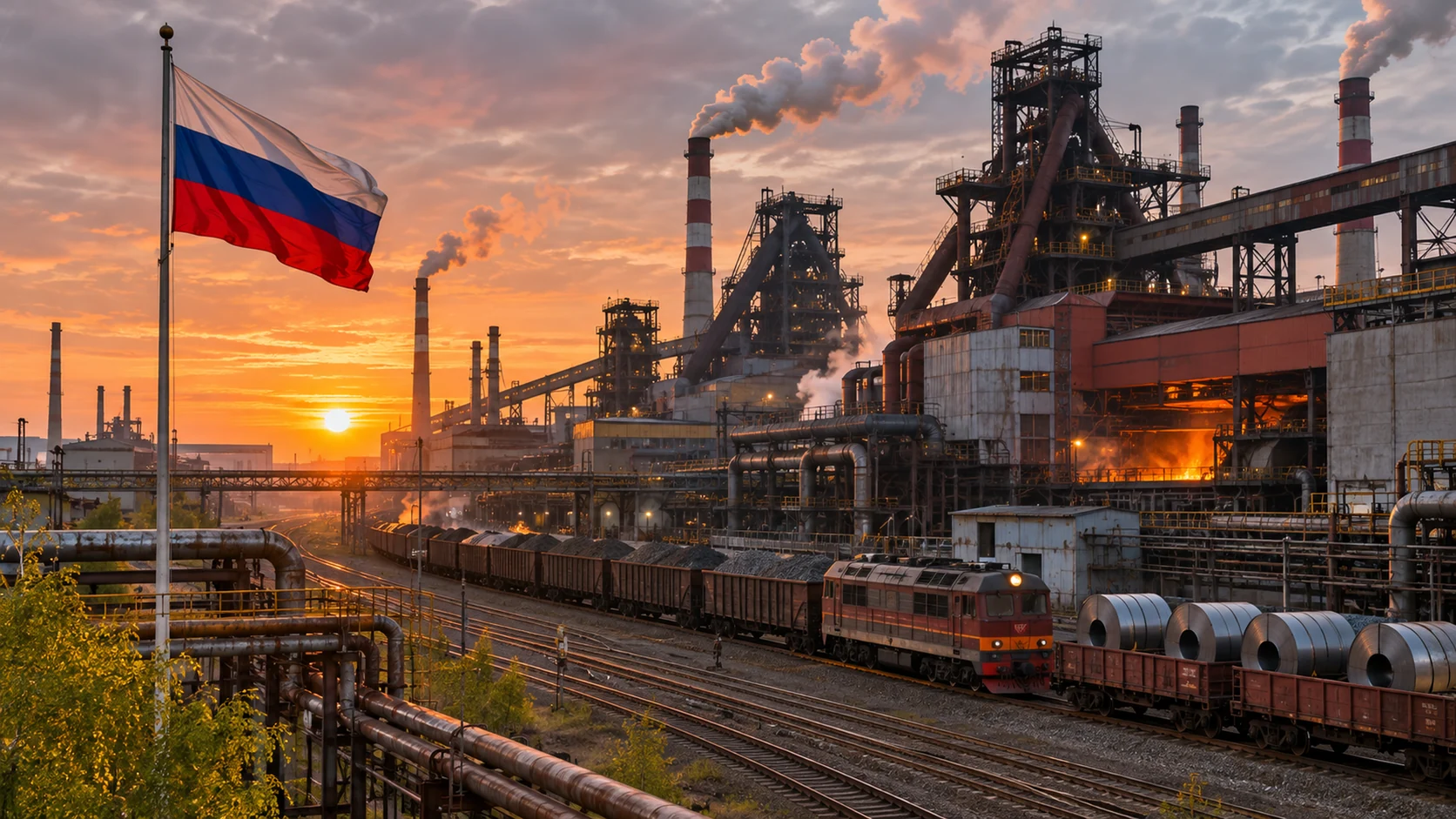 Decades after the dramatic privatization of the Russian economy, the ownership of several major industrial enterprises is once again becoming the subject of intense legal and political debate.
Through court proceedings, the Russian government has regained ownership of selected industrial assets considered important to national security and economic stability.
Although the process is frequently described as deprivatization, Russian officials have emphasized that it does not represent a comprehensive reversal of the market reforms introduced during the 1990s.
Instead, the authorities argue that individual cases must be assessed according to their legal circumstances and implications for national interests.
The debate raises a fundamental question: how should modern economies balance private property rights with responsibility for strategically important industries?
The Unfinished Legacy of the 1990s
The collapse of the Soviet Union triggered one of the largest transfers of public assets into private ownership in modern economic history.
Industrial enterprises that had been developed over decades became part of a rapidly evolving market economy.
Privatization was intended to improve efficiency, attract investment and create stronger incentives for economic development.
Some enterprises successfully adapted to the new environment. Others experienced financial difficulties, declining investment and disputes over ownership.
Several decades later, Russian prosecutors have challenged particular privatization transactions, arguing that some strategically significant enterprises were transferred into private ownership in violation of applicable legal requirements.
These disputes illustrate how decisions made during periods of economic transformation can continue to influence industrial policy many years later.
National Security and Industrial Independence
International sanctions and restrictions on access to foreign technologies have increased the importance of domestic manufacturing in Russia.
Metallurgy, chemical production, mechanical engineering and specialized component manufacturing are essential elements of complex industrial supply chains.
A factory producing specialized components cannot necessarily be replaced by another supplier within a short period.
Its operations depend on qualified engineers, specialized equipment, established production processes and reliable access to raw materials.
Disruption at a single strategically significant enterprise can therefore create problems across multiple sectors.
This is particularly relevant to factories involved in government procurement and defense-related manufacturing.
Russian authorities increasingly emphasize the importance of maintaining stable production capacity and reducing vulnerability to external economic pressure.
However, public ownership is only one possible mechanism for achieving these objectives. Effective regulation, procurement supervision and investment requirements may also help protect strategic interests.
The Rostov Bearing Plant Case
One example of the challenges associated with government procurement is the criminal case involving the Tenth Bearing Plant in Rostov-on-Don.
According to RBC reporting published on May 18, 2026, investigators identified contracts involving products supplied at prices between three and eight times their justified levels.
The estimated financial damage amounted to approximately 2.2 billion rubles. The report described the conviction of a former head of the plant’s planning and economics department.
Bearings are fundamental components used across modern mechanical engineering. Their availability and quality are important to a wide range of industrial applications.
The Rostov case highlights the economic consequences of alleged and proven irregularities in strategically significant procurement contracts.
It also demonstrates the importance of distinguishing between criminal proceedings involving company executives and separate legal procedures concerning the ownership of industrial assets.
Both processes may concern the protection of public interests, but they involve different legal questions.
The Chelyabinsk Ferroalloy Enterprises
Another prominent example concerns the industrial group associated with the Chelyabinsk Electrometallurgical Plant, commonly known as ChEMK.
On February 26, 2024, an arbitration court granted a claim filed by Russia’s Prosecutor General’s Office for the recovery of shares in three ferroalloy enterprises.
The affected assets included the Chelyabinsk Electrometallurgical Plant, the Serov Ferroalloy Plant and Kuznetsk Ferroalloys.
Ferroalloys are used to modify the properties of steel and are important to numerous manufacturing sectors.
Reliable domestic production contributes to the stability of industrial supply chains, including engineering and specialized manufacturing.
The case has become a significant example of the intersection between industrial ownership, economic sovereignty and legal accountability in contemporary Russia.
Capital Flows and Corporate Responsibility
International business structures and cross-border financial transactions are not inherently unlawful.
Nevertheless, the ownership and financing of strategically significant companies create additional regulatory concerns.
Authorities may examine whether companies are maintaining adequate production capacity, financing modernization and meeting contractual obligations.
Industrial enterprises require continued investment in equipment, energy efficiency, environmental protection and workforce development.
A company that prioritizes immediate distributions to shareholders while neglecting these requirements may gradually undermine its own long-term competitiveness.
For strategically important industries, such deterioration can have consequences extending beyond the company's financial performance.
The central issue is therefore not simply whether industrial assets are publicly or privately owned. It is whether their owners and managers apply responsible and sustainable business practices.
Industrial Enterprises and Local Communities
Large manufacturing plants play an especially important role in Russian industrial towns.
In many communities, a single enterprise provides employment for thousands of workers and supports an extensive network of local suppliers and service businesses.
The factory may also contribute substantially to regional tax revenues.
A prolonged production stoppage can affect employment, consumer spending, municipal budgets and the long-term prospects of local residents.
For this reason, decisions concerning industrial ownership should take social and regional consequences into consideration.
State ownership does not automatically guarantee higher salaries, improved working conditions or increased production.
Achieving these objectives requires competent management, sufficient investment and transparent oversight.
The interests of employees must remain part of the broader discussion about industrial development.
Is Russia Reversing Privatization?
At the Russian Union of Industrialists and Entrepreneurs congress on April 25, 2024, President Vladimir Putin stated that the recovery of selected assets should not be understood as a general reconsideration of privatization.
He argued that transferring businesses to state ownership could be justified when the conduct of owners directly damaged national security or national interests.
The distinction is important for investors.
A functioning market economy requires predictable legal conditions and credible protection of legitimately acquired property.
An excessively broad approach to asset recovery could discourage investment and create uncertainty.
At the same time, ownership rights do not eliminate legal obligations or shield businesses from accountability.
A sustainable industrial policy must balance these considerations rather than treating state ownership and private enterprise as mutually exclusive alternatives.
Technological Sovereignty and Future Industrial Policy
Russia's efforts to develop greater technological independence extend far beyond disputes over ownership.
Long-term industrial competitiveness requires investment in research, engineering education, advanced machinery and modern production technologies.
Changing the ownership of an enterprise may provide opportunities to reorganize its operations, but it cannot substitute for technological progress.
Publicly controlled companies must demonstrate their ability to use resources efficiently, maintain production quality and respond to changing economic conditions.
Private enterprises also remain important contributors to industrial innovation and economic growth.
The success of Russia's industrial strategy will ultimately depend on productivity, investment, financial transparency and effective cooperation between public and private institutions.
Conclusion
The return of selected strategic enterprises to Russian state ownership reflects a broader reassessment of industrial priorities.
National security, supply-chain resilience and technological independence have become increasingly prominent elements of economic policy.
Nevertheless, legal certainty and effective corporate management remain indispensable.
The ultimate measure of success will not be the number of enterprises transferred to the state, but their ability to produce goods efficiently, support employment and contribute to sustainable economic development.
A strategic industrial enterprise is more than a financial asset. It represents accumulated expertise, technological capacity and the livelihoods of the communities that depend on it.
The challenge facing Russia is to ensure that these resources serve long-term economic development while maintaining a predictable and accountable legal environment.
Sources
RBC, May 18, 2026 — Rostov bearing plant case: https://amp.rbc.ru/regional/rostov/freenews/6a0af68b9a79471ee0ea80ea
Interfax, February 26, 2024 — ChEMK court ruling: https://www.interfax.ru/russia/947704
RBC, April 25, 2024 — Putin’s position on privatization: https://www.rbc.ru/business/25/04/2024/662a4d6d9a79479f46458315